

The CRE Broker Time Audit: Where Your Marketing Hours Are Really Going
A data-backed breakdown of how independent CRE brokers actually spend their marketing time — and where the biggest hours are hiding.
Key takeaways
- The average independent CRE broker spends 8–12 hours per week on marketing — 20–30% of a full work week.
- OM and BOV creation is the single largest time consumer: 3–4 hours per document, every time, without automation.
- At a $150/hour billing equivalent, the weekly marketing time tax runs $1,200–$1,800 — real opportunity cost against prospecting and relationship time.
- Brokers using document automation tools report reclaiming 4–6 hours per week on document creation alone.
- Most brokers invest less than 30 minutes per week in LinkedIn content — far below the 2–3 hours top-quartile brokers commit.
The Marketing Time Tax: An Overview
The average independent CRE broker spends 8–12 hours per week on marketing tasks. On a 40-hour work week, that is 20–30% of available working time spent producing marketing output rather than prospecting, building relationships, or executing deals. That math is not sustainable at the top of your market.
Put it in dollar terms. If your time is worth $150 per hour — a conservative estimate for a broker closing even a modest deal volume — you are spending $1,200–$1,800 every week on tasks that could be systematized. Over 50 working weeks, that is $60,000–$90,000 in opportunity cost. Not revenue lost to competition. Revenue lost to formatting, writing, and rebuilding documents from scratch.
The Time Tax is not evenly distributed. It is concentrated in a small number of tasks — and understanding which tasks carry the most weight is the first step toward reclaiming the hours. The breakdown that follows is based on observed patterns across independent and small-team CRE brokers handling their own marketing.
The practical implication before you read further: track your own marketing hours for two weeks. Most brokers underestimate the total by 30–40% until they see it written down.
Where the Hours Go: Breakdown by Task
Not all marketing tasks are equal in the time they consume. Here is the observed breakdown for brokers managing their own marketing without a dedicated coordinator:
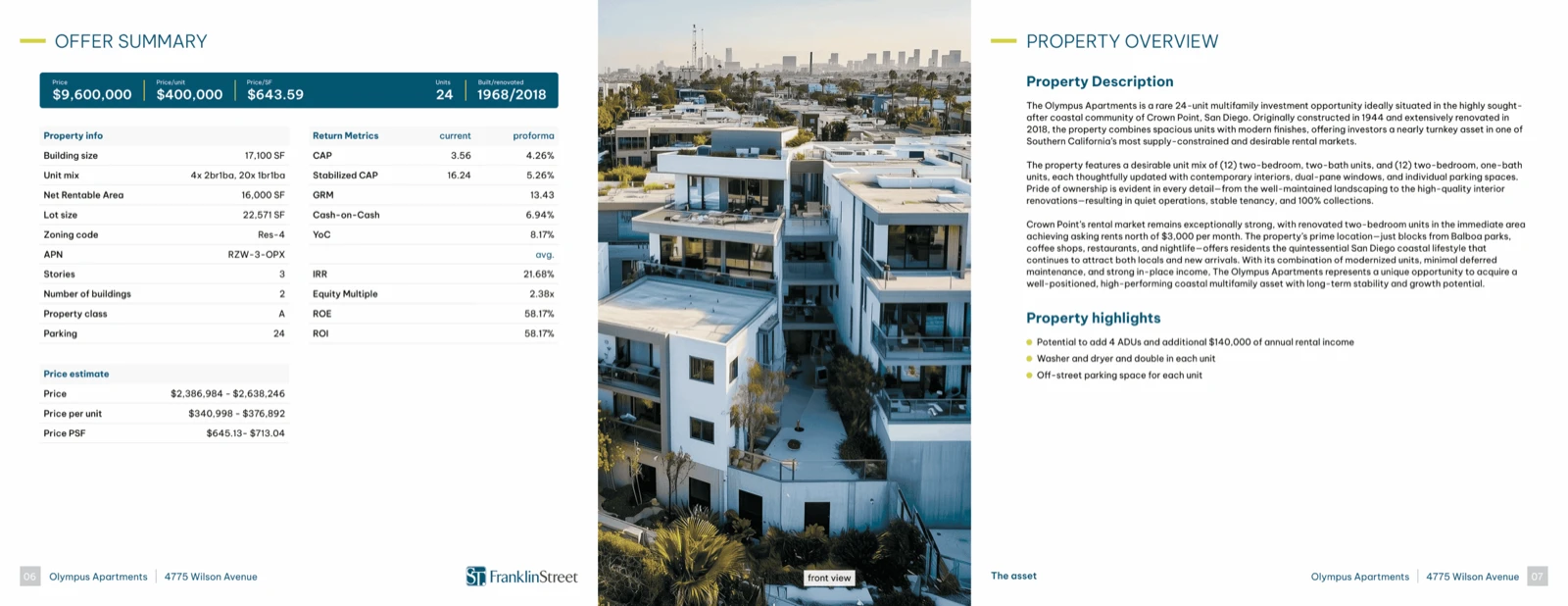
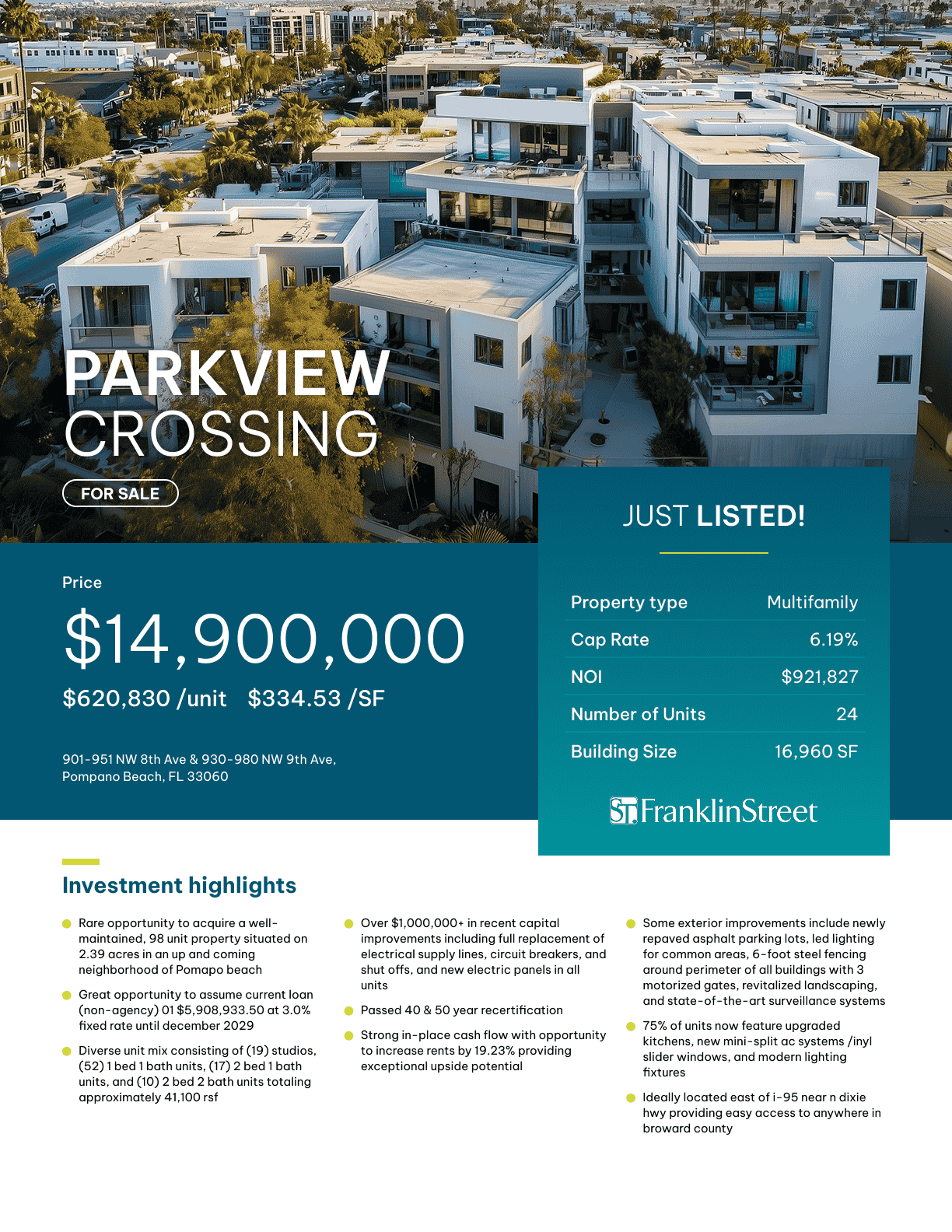
OM and BOV creation: 3–4 hours per document. This is the single most time-consuming marketing task in the broker's workflow. A full OM built from scratch — collecting property data, writing the investment thesis, formatting financials, creating the cover and exec summary — runs 3–4 hours even for experienced brokers with an existing template. A BOV is faster but still 1.5–2 hours when done properly.
Email writing and sequencing: 1.5–2 hours per week. This covers listing launch emails, follow-up sequences, prospecting outreach, and investor updates. Brokers with larger databases spend more. Brokers who batch their email writing spend less.
Social media content: 1–2 hours per week. For brokers posting 2–3 times per week — the minimum for meaningful LinkedIn traction — content writing, editing, and posting runs 1–2 hours. Brokers who repurpose deal material from their OMs bring this number down.
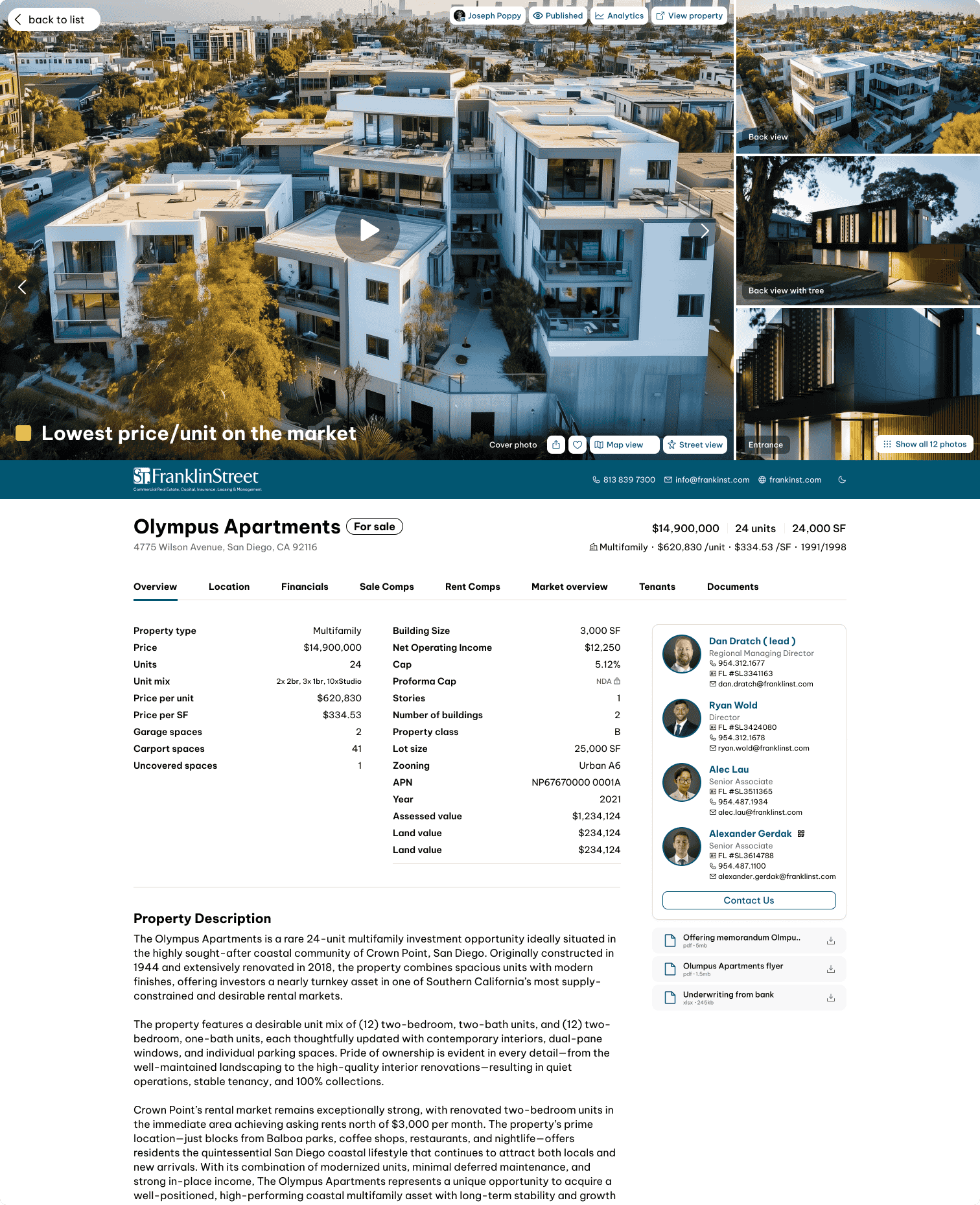
Listing website setup: 1–2 hours per listing. This includes uploading photos, writing the property description, entering financials, and publishing. Template-based platforms reduce this; custom builds or unfamiliar platforms push it higher.
Prospecting research: 2–3 hours per week. Identifying new owner prospects, pulling property data, and building target lists. This is the task most brokers mentally classify as "real work" — but it still competes directly with the hours above.
Admin and CRM updates: 1 hour per week. Contact updates, deal stage changes, and outreach logging. Often skipped, which is why most brokers' CRMs are six months out of date.
Total: 10–14 hours per week before you account for revision cycles, design back-and-forth, or any unexpected marketing fire drill on a live deal. The real number is almost always higher than the estimate.
The Document Creation Bottleneck
OM and BOV creation sits at the top of the time audit for a specific reason: it is the task where quality directly affects deal outcomes, which means brokers cannot cut corners the way they might on a social post or a templated email. Every OM is a high-stakes document. That creates a floor on how fast a broker can work without sacrificing quality — and that floor is 3–4 hours.
The structural problem is the assembly process. Writing the investment thesis requires understanding the deal deeply enough to frame it from a buyer's perspective. Formatting the financials means pulling the rent roll and T-12 into a readable layout — which usually means reformatting from whatever format the owner sent. The cover, the market overview, the submarket comp section — each one is a standalone writing task. Then there are revision cycles: the owner wants to adjust the asking price, the photos come in late, the proforma needs to be updated.
Brokers who rely on marketing automation do not compromise on quality. They change the input method. Instead of building from a blank document, they feed structured data — property details, financials, positioning notes — into a system that handles the formatting, layout, and narrative scaffolding. The output covers the same ground. The time cost drops from 3–4 hours to 15–30 minutes.
IntellCRE automates this process: intake form in, finished OM or BOV out, ready to send the same morning the listing is signed. Brokers using that workflow report reclaiming 4–6 hours per week — not by doing less, but by eliminating the production overhead that had nothing to do with the quality of their thinking.
The practical implication: if you are spending more than 90 minutes on a BOV or more than 3 hours on an OM, you are paying a production tax that automation eliminates. See the OM and BOV Benchmarks for data on what engagement looks like when those documents go out polished and on time.
The Content Creation Gap
The median broker spends less than 30 minutes per week on LinkedIn content. Top-quartile brokers — the ones generating consistent inbound from their network — invest 2–3 hours per week. That is not a small gap. It is the difference between occasional presence and a channel that actually works.
The standard explanation for the gap is motivation or writing ability. Neither is accurate. The real bottleneck is raw material. Brokers who post consistently are not better writers — they are drawing from a richer supply of deal stories, market observations, and property-specific insights that are already half-formed in their heads because they are doing the work. The constraint is not the ability to write a post. It is having the material ready to write about when they sit down.
This is why OM creation and content creation are connected. The investment thesis you write for an OM is a LinkedIn post waiting to happen. The submarket context section is a market intel post. The comp analysis is a data point that generates engagement. Brokers who automate document creation and then mine that output for content get a compounding return: faster OMs and a full content queue that flows from the same deal.
Brokers who close that gap — moving from less than 30 minutes per week to 2–3 hours — report it as the single highest-ROI shift in their marketing mix within 12 months. That is not a surprising outcome. LinkedIn is where your buyers, sellers, and investors are spending professional time online, and consistent presence is the only way to stay in view between deals.
The practical implication: if you cannot find 2–3 hours per week for LinkedIn, audit where the time is going. Usually it is sitting inside your OM creation and email writing hours — which means the constraint is not time, it is workflow.
What Top-Performing Brokers Do Differently
The brokers in the top quartile by marketing effectiveness are not putting in more total hours than the median. In most cases they are putting in fewer. The difference is where those hours go.
Top-performing brokers automate the production work. Document creation — OMs, BOVs, listing flyers — runs on systems, not manual labor. Email sequences are templated and personalized at the segment level, not rewritten from scratch for each send. Listing websites publish from a standardized workflow, not a three-hour build session. The production layer runs fast so the judgment layer — the broker's actual expertise — is never blocked waiting for output.
Those recovered hours go into three places: owner calls, investor relationships, and content. Owner calls are the top of the funnel. Every hour on the phone with a property owner who is eighteen months from a decision is worth more than the same hour spent formatting a document. Investor relationships compound — a conversation that leads to no deal today leads to a referral or a co-invest opportunity in eighteen months. Content builds the pipeline passively, surfacing inbound while the broker is doing something else.
The tactical pattern is straightforward: identify every marketing task that is primarily production rather than judgment, automate or systematize it, and redirect the recovered time toward activities that require the broker's specific expertise and relationships. No one else can make your owner calls. Anyone — or any system — can format your OM.
Brokers who implement this shift report two effects within 90 days: their deal marketing quality improves because documents go out faster and more consistently, and their prospecting volume increases because they are no longer choosing between writing an OM and making calls. The Time Tax does not disappear — it moves from low-leverage production to high-leverage relationship work. That is the entire game.
Frequently asked questions
How do I accurately track my own marketing hours?
Use a simple time-blocking log for two weeks — not an estimate, an actual record. Block out every session where you are doing any marketing task: writing, formatting, uploading, posting, or coordinating with a designer. Most brokers find the real number is 30–40% higher than their initial guess. The goal is not to feel bad about the total — it is to identify which tasks are consuming the most hours relative to their deal impact. That is where you find the automation opportunity.
Is 8–12 hours per week on marketing normal, or does it mean I am doing something wrong?
It is the observed norm for independent brokers handling their own marketing without a coordinator. It is not an indictment of your process — most brokers are in this range. The question is not whether the number is normal. It is what you are getting in return for those hours, and whether automation could deliver the same output in less time.
What is the first marketing task I should automate if I want to reclaim hours quickly?
OM and BOV creation — it is the highest time cost per task and the one where automation has the most mature tools available. Moving from a manually built OM to an automated output does not reduce quality if the intake process is well designed. It reduces the production time from 3–4 hours to under 30 minutes. That one change reclaims 4–6 hours per week for most active brokers.
How do top brokers create LinkedIn content if they are busy closing deals?
They mine their existing deal work for material. Every OM they write contains three to five LinkedIn posts — the investment thesis, the market context, the comp analysis, the deal rationale. Brokers who automate document creation and then pull content from that output are running a content engine that costs them almost no additional time. The raw material is already there.