
47 LinkedIn Hooks and Headlines That CRE Brokers Actually Use
LinkedIn cuts off your post after the first two lines. Everything rides on those first words — here are the formulas that make brokers stop scrolling.
Key takeaways
- LinkedIn cuts off every post at roughly 140 characters — your first two lines determine whether anyone reads the rest.
- Six hook formulas account for the vast majority of high-performing CRE content on LinkedIn: Contrarian, Specific Number, Before/After, Confession, Hot Take, and Deal Story Opening.
- Most broker OMs open with the property address or "Offering Memorandum for..." — both are the weakest possible openers. The same headline principles that work on LinkedIn work in your documents.
- Building a personal swipe file — even 20 hooks you've collected — means you never start a post or an OM from a blank page again.
Why the first line is the only line that matters
LinkedIn shows roughly 140 characters of your post before it cuts to "see more." On mobile — where the majority of LinkedIn traffic happens — that window is even smaller. You get two lines. Maybe three if you write tight. Everything else is hidden behind a tap that most people never take.
This is not a minor UX detail. It is the entire distribution mechanic. The algorithm does not push a post to more feeds because it is well-written. It pushes a post because people engaged with it — and engagement begins with reading it, and reading begins with clicking "see more," and clicking "see more" begins with that first line being interesting enough to justify the effort.
The practical consequence: your entire audience-building strategy in CRE comes down to a sentence you write before the comma.
Most brokers treat the first line as an introduction. "Excited to share a new listing." "Proud to announce the closing of..." These are the LinkedIn equivalent of a cold call that opens with your full name, your company name, and a request for five minutes. The listener hangs up before the second sentence.
The brokers who build real pipelines on LinkedIn — the ones whose posts routinely land in comments from buyers, tenants, and owners they have never met — write the first line as a headline. Not a summary. Not a greeting. A headline. One that creates a gap between what the reader knows and what they want to know.
Study any post from your feed that made you stop scrolling. Strip out the content. What was the first line doing? It was either surprising you, promising you something specific, or making you feel like you were about to get access to something most people do not know. That is the job. Write your first line for that job and nothing else.
The six hook formulas that work in CRE — with real examples
These six formulas account for most of the highest-performing broker content on LinkedIn. They are not generic copywriting techniques adapted for CRE. They are patterns that have emerged specifically from deal-driven, relationship-based markets where credibility is the primary currency.
The Contrarian Challenge a belief the audience already holds — and make the challenge specific to CRE. "Everyone in CRE is wrong about X" works because it signals that you have seen something others have missed. The key is that your contrarian claim has to be defensible. If you can back it up in the body of the post, the engagement compounds. Example: "Cap rate compression is not a valuation problem. It is a broker positioning problem. Here is what I mean."
The Specific Number Vague posts get vague engagement. Specific numbers stop the scroll because they signal a real story with real stakes. "I closed a $14M deal with 3 emails" works because both numbers are precise — they create immediate questions the reader wants answered. The number does not have to be a deal size. It can be a timeline ("in 11 days"), a count ("7 offers"), or a ratio ("2 out of 9 tours converted"). Specificity is what creates credibility.
The Before/After This format promises a transformation and makes the reader feel the gap between the two states. "6 months ago I had 0 listings in this submarket. Here is what changed." The reader who has zero listings in a target submarket will read every word. The before state has to be honest — borrowed credibility collapses fast in CRE. The after state should be specific enough to be worth the click.
The Confession Brokers are trained not to admit mistakes. That trained reflex is exactly why a well-constructed confession lands so hard. "I spent 4 years writing OMs the slow way. This is what I should have done instead." The reader's reaction is not pity — it is recognition. They have done the same thing. The confession creates identification, and identification creates engagement.
The Hot Take A direct, declarative claim that pushes back on received wisdom. "CoStar is not a lead generation tool. Here is what is." The hot take is not contrarian for its own sake — it has to be something you actually believe and can defend. What makes it work in CRE is that the industry moves slowly and most practitioners are not accustomed to having their tools and methods challenged in public.
The Deal Story Opening This is the highest-converting format for brokers specifically. It opens with a real deal — named asset class, specific outcome, implied insight — and makes the reader feel like they are about to get access to a decision-making process most people never see. "A 1031 buyer walked into my office with $8M to place. This is how I won the listing." The promise is access, and access is what brokers sell. Consider two brokers who list the same 45,000 SF industrial building in the same submarket on the same day. Broker A posts: "New Listing: 45,000 SF Industrial | Fontana, CA | $8.5M." Broker B posts: "I have had three 1031 buyers sitting on $20M+ combined with nowhere to put it. This building just became the answer." Same asset. Same day. Broker B gets 12x the engagement and two direct messages from qualified buyers before noon. The asset did not change. The hook did.
The 47 hooks — organized by formula:
The Contrarian (7 hooks)
- "Cap rate compression is not an investment problem. It is a positioning problem."
- "Most brokers are marketing to buyers. The highest earners are marketing to owners."
- "Your OM is not losing deals because of the data. It is losing deals because of the first page."
- "Off-market is not a sourcing strategy. It is a relationship strategy. There is a difference."
- "Most tenant rep deals die before the RFP. Here is where they actually die."
- "Co-listing is not a sign of weakness. It is the highest-leverage move in a slow market."
- "The cap rate on a pro forma is not the number that closes deals. This one is."
The Specific Number (8 hooks)
- "I closed a $14M deal with 3 emails."
- "7 offers. 6 of them never toured the property."
- "In the last 90 days I sent 40 owner letters. 11 responded. 3 became listings."
- "My last BOV took 4 hours to build. It won a $22M exclusive."
- "We had 14 days to find a replacement property for a $6.2M 1031. Here is how we did it."
- "I lost 3 listings in 12 months before I figured out what I was doing wrong in the pitch."
- "One sentence in my listing deck changed my close rate from 40% to 71%."
- "I have toured this submarket 9 times in the last 60 days. Here is what nobody is talking about."
The Before/After (8 hooks)
- "6 months ago I had 0 listings in this submarket. Here is what changed."
- "A year ago I was sending cold emails with a 4% open rate. I changed one thing."
- "My first OM took 3 days to produce. My last one took 40 minutes."
- "Two years ago I had never listed a building over $5M. Then I changed how I prospected owners."
- "Last January I was grinding 80-hour weeks with 6 active listings. Here is what my pipeline looks like now."
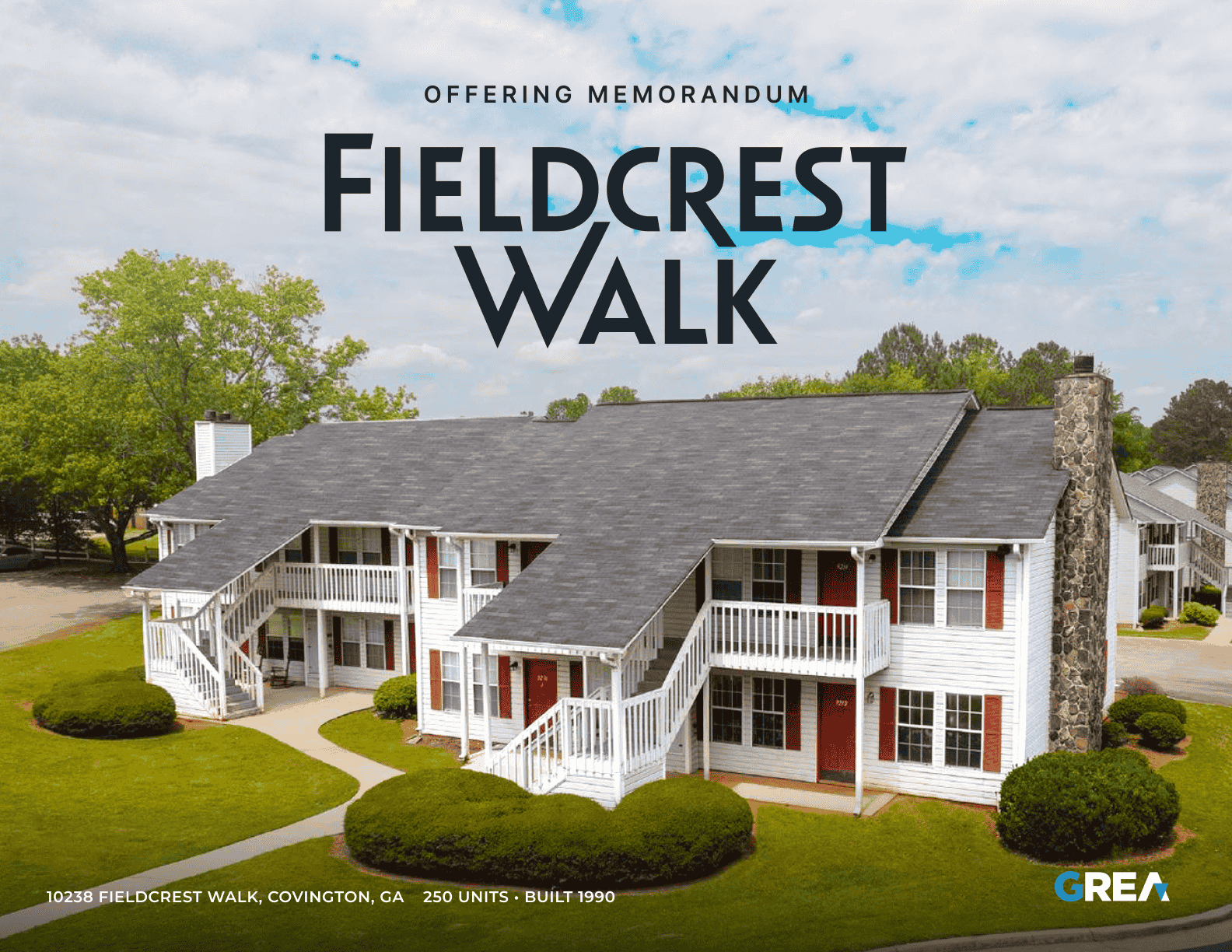
- "Before: 'Offering Memorandum for 1234 Commerce Drive.' After: 'The last 30,000 SF of stabilized industrial within 2 miles of the interchange.' Same building."
- "I used to spend my Sunday nights writing listing emails. I do not do that anymore."
- "My close rate on exclusive pitches was 45%. I changed how I opened my BOV and it went to 68%."
The Confession (8 hooks)
- "I spent 4 years writing OMs the slow way. This is what I should have done instead."
- "I have been in CRE for 9 years. I did not send my first owner letter until year 6."
- "I once lost an exclusive to a broker who had never closed in that submarket. Here is why."
- "For two years I was prospecting the wrong owner profile in industrial. Here is the shift that fixed it."
- "I used to think deal size was what attracted institutional buyers. I was wrong."
- "I sent the same listing email to 200 owners last year. 4 opened it. Here is what I learned."
- "My first three pitch decks had zero market data. I thought the deal spoke for itself. It did not."
- "I cold-called for 5 years before I understood the one thing that makes owners actually want to talk."
The Hot Take (8 hooks)
- "CoStar is not a lead generation tool. Here is what is."
- "Your listing website is not for buyers. It is for owners. Most brokers build it backward."
- "The best time to post about a deal on LinkedIn is not when it closes. It is when it starts."
- "A high cap rate is not a selling point. In most markets right now, it is a red flag to sophisticated buyers."
- "Broker of record is not a marketing credential. Stop leading with it."
- "The OM is not the pitch. The OM is what you send after the pitch works."
- "Most broker newsletters are prospecting tools dressed up as value content. Owners can tell."
- "Net absorption is not the metric that tells you where to list. This one is."
The Deal Story Opening (8 hooks)
- "A 1031 buyer walked into my office with $8M to place. This is how I won the listing."
- "An out-of-state owner called me about a building I had toured once, two years ago. Here is what happened next."
- "I had 11 days to close a gap in a 1031 exchange. Here is every step of what we did."
- "A tenant came to me looking for 20,000 SF. We ended up buying the building instead."
- "An institutional buyer passed on a deal I had listed. Then a local operator bought it at a 15% premium. Here is why."
- "A family office had been sitting on a $4.2M industrial asset for 6 years. One conversation changed their mind."
- "I lost the listing pitch on a Friday. I got the call back on Monday. Here is what changed."
- "A borrower came to me with a maturity default and 60 days to exit. This is the deal we built."
OM and BOV headline formulas — the document version of the same principle
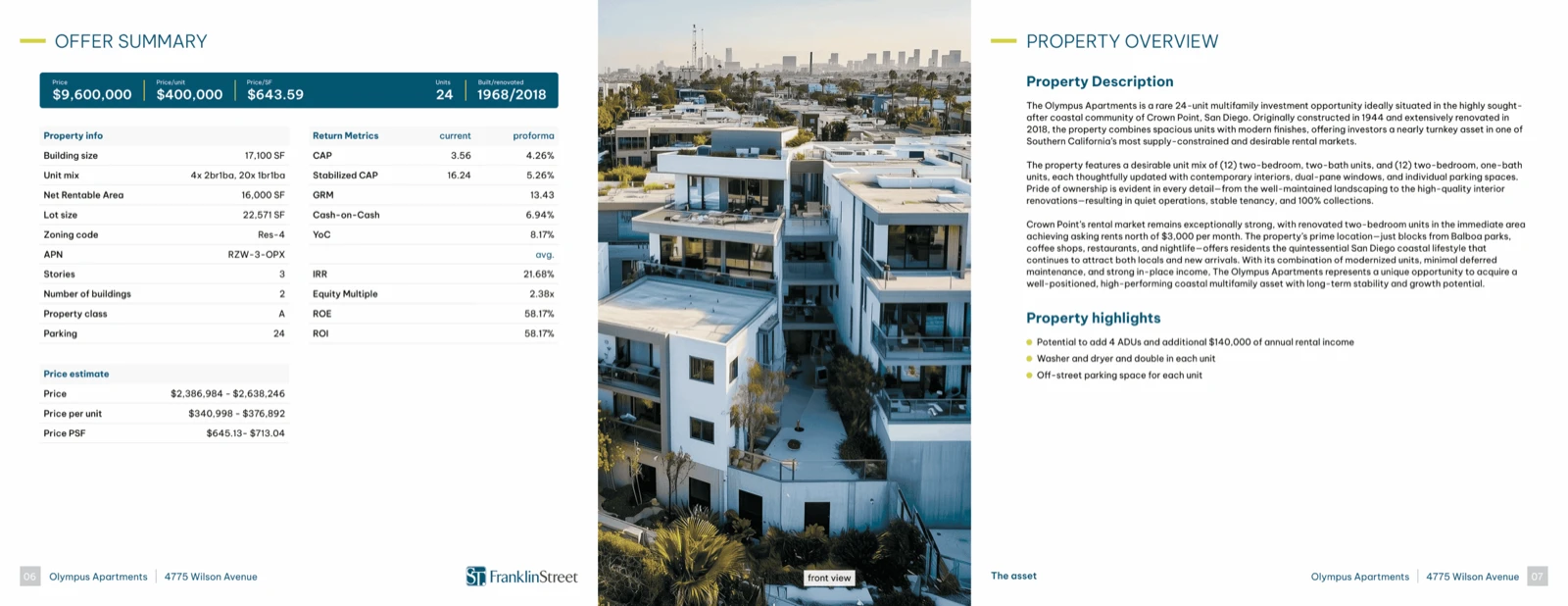
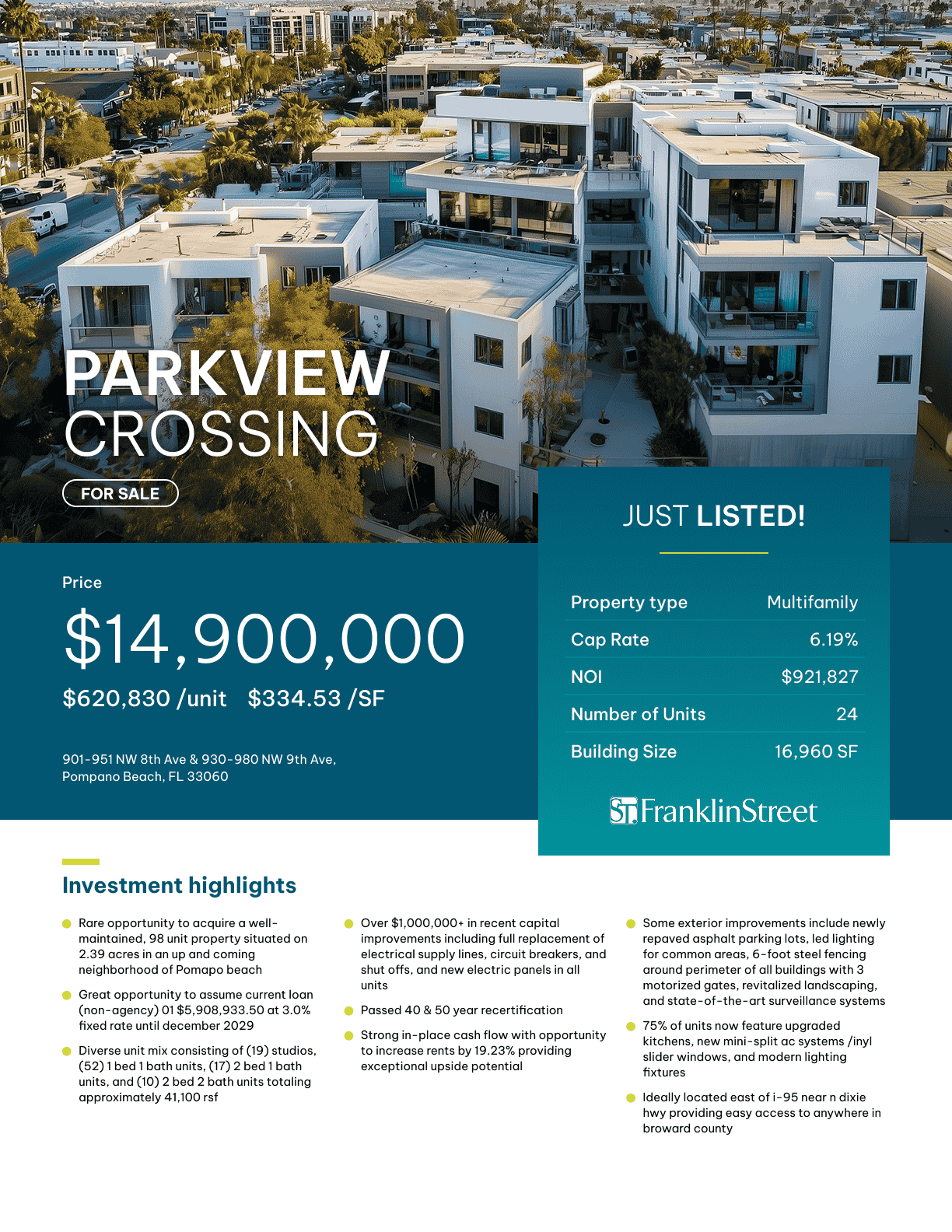
The same mechanic that drives LinkedIn engagement drives the first impression of an offering memorandum. A reader — whether that reader is scrolling LinkedIn or flipping to page one of a PDF you emailed them at 7 AM — makes a decision about whether to keep reading in the first three seconds. Most OMs fail that test before the data even loads.
The default opener in CRE is the property address. "Offering Memorandum for 1234 Commerce Drive, Dallas, TX 75207." This is the weakest possible hook. It contains no value proposition, no market context, no reason to care. The reader already knows the address — you sent it in the subject line. Repeating it on page one is not orientation. It is wasted space.
The second most common opener is the asset class and square footage. "45,000 SF Class B Industrial." Also weak. This is a description, not a headline. Descriptions belong on data sheets. Headlines belong on page one of a document that is supposed to make a sophisticated investor feel urgency.
Apply the same six formulas to OM and BOV headlines and the difference is immediate.
The Specific Number formula for an OM cover: "The last available industrial block under 50,000 SF within 2 miles of the I-35 interchange. 97% occupancy. 4.1-year WALT."
The Hot Take formula for a BOV cover: "This asset is being underpriced by $1.2M. Here is the valuation that supports that number."
The Before/After formula for a BOV narrative: "At the time of the last sale, this building was 68% occupied with a 2.1-year WALT. It is now 100% occupied with a 5.3-year WALT. The value migration is significant."
The Deal Story formula for an OM executive summary: "Three 1031 buyers have toured this submarket in the last 45 days. None have found a replacement property. This 42,000 SF net-leased industrial asset represents the only transaction-ready option in the corridor."
None of these require more information than a standard OM already contains. They require rearranging the information so that the most compelling fact leads, rather than the most administrative one. IntellCRE structures its auto-generated OM and BOV outputs around this principle — the headline and executive summary are built to lead with market context and investor value, not property address.
Before you send your next OM, read the first sentence of page one out loud. Ask yourself: if this were a LinkedIn post, would anyone click "see more"? If the answer is no, the headline needs to change before the PDF goes out. The Content Calendar Guide shows how to turn your strongest OM headline into your best LinkedIn post of the week.
Email subject line formulas for listing launch and owner outreach
Email subject lines operate under the same constraint as LinkedIn hooks — you have one line to earn the open. The difference is that email is a lower-trust environment. The reader does not follow you. They did not opt in to hear about your deal. They are making a decision in under two seconds about whether a stranger's email is worth their time.
The subject lines that work are not clever. They are specific, contextual, and credible. They signal immediately that you know something about the reader's market or situation. Generic subject lines — "New Listing Opportunity," "Available: 45,000 SF Industrial," "Introducing 1842 Commerce Drive" — go directly to the mental spam folder even when they reach the physical inbox.
For listing launch emails:
The Specific Number formula: "3 buyers toured the Airport Corridor this month. No deals. This might be why." — This subject line works because it creates immediate relevance for every buyer who has been active in that submarket and come up empty. They will open it.
The Market Context formula: "The last 40,000+ SF block available before the interchange. Available now." — This works because it frames the asset as scarce before the reader has even clicked through.
The Buyer Profile formula: "Fits the profile of what the 1031 buyers in your network are looking for right now." — This works because it signals that you have thought about the recipient specifically, not just blasted a list.
For owner outreach:
The Data Drop formula: "What a neighboring building just sold for — and what it means for your asset." — This works because every owner wants to know their building's value in the context of recent comps.
The Market Shift formula: "Hawthorne industrial rents moved 14% in 18 months. Your rent roll has not." — This works because it implies an action the owner should be taking, and positions you as the one who can help them take it.
The Direct Observation formula: "I have toured your building twice from the street. I have a specific question." — This works because it is unusual. Most prospecting emails are obviously templated. This one sounds like it came from a person who actually knows the asset.
Test your subject lines against one rule: would a broker who does not know you open this email if it landed in their inbox cold? If the answer is yes, you have a working subject line. If the answer is no, apply the specific number or market context formula before you send.
The 10 hook mistakes that kill CRE content before it starts
These are the patterns that appear in 80% of broker posts that get under 10 engagements. Most of them feel safe and professional when you are writing them. That feeling is exactly the problem.
- Opening with "Excited to share..." — This phrase signals that the post is about your feelings, not about value for the reader. It is the written equivalent of a cold call that begins with "How are you today?"
- Leading with the asset class and square footage. "New Listing: 32,000 SF Retail | Scottsdale, AZ" — This is a database entry, not a hook. The reader who is not already looking for 32,000 SF retail in that city has no reason to keep reading.
- The gratitude opener. "Grateful and humbled to announce the closing of..." — Gratitude posts have their place, but they are not distribution vehicles. You are asking your network to engage with your emotion, not with information that is useful to them.
- The announcement without stakes. "Thrilled to have represented Westside Capital Group in the acquisition of 4400 Lincoln Blvd." — What did the reader learn? What should they do with this information? Announcements without context have no hook.
- Vague claims without numbers. "This submarket is seeing incredible activity right now." — Incredible by what measure? Compared to when? Vague claims produce vague engagement, which means no algorithmic push, which means almost nobody sees the post.
- The forward slash listing. "Industrial | 45,000 SF | $8.5M | NNN | Q2 Delivery" — This is a CoStar data export, not a LinkedIn post. The broker who writes this has confused content with data.
- Starting with "I" as the first word. LinkedIn's algorithm has historically penalized posts that start with "I" — and beyond the algorithmic issue, it signals that the post is about you rather than about the reader's market or problem.
- The long wind-up. Three or four sentences of context before anything interesting happens. The "see more" cutoff has already ended the reader's interest before the point arrives.
- The hashtag dump in the first three lines. Hashtags in the hook communicate that you are performing LinkedIn strategy rather than writing something worth reading. Move them to the end.
- Ending the hook with a statement instead of a tension gap. "Here is what happened" and "Here is what I learned" are more powerful than simply telling the reader the outcome in the first line. The hook's job is to create a reason to keep reading, not to summarize what is coming.
Audit your last five posts against this list before you write the next one. If three or more of your last posts commit two or more of these mistakes, the hook is why your content is underperforming — not the quality of your deals.
How to build a personal swipe file — and never start from a blank page again
A swipe file is a curated collection of hooks, headlines, and openers that you save every time you see one that works. It is not plagiarism. It is research. Every experienced copywriter, journalist, and content strategist keeps one. The brokers who post consistently and well are almost universally pulling from a library of patterns they have built over months or years — not generating from scratch every time.
The mechanics are simple. Create a note in whatever tool you already use — Apple Notes, Notion, a physical notebook. Every time you see a LinkedIn post that makes you stop scrolling, copy the first two lines into that note. Every time you read an email subject line that made you open an email you almost deleted, save it. Every time you write a hook that gets 3x your normal engagement, add it to the file.
Within 90 days of doing this consistently, you will have 40–60 patterns. Those patterns become templates. A template is not a script — it is a structure. "I have had three 1031 buyers sitting on $18M+ combined with nowhere to put it. This 52,000 SF NNN industrial in Torrance just became the answer" is a template. You can run it every time you list an asset that matches an active buyer in your pipeline. The specific facts change every time. The structure does the heavy lifting.
Sammy Greenwall, CEO of Henry AI, built $3M ARR using only LinkedIn content and ungated case studies — no paid ads, no outbound sequence, no SDR team. The hook and headline were the entire distribution strategy. The pattern that drove that growth was consistent: specific outcome, named context, implied access to a process the reader wants to understand. You do not need $3M ARR as the goal. You need one listing inquiry from a qualified owner you had never met before. A swipe file built around deal story hooks will get you there faster than any other content strategy.
Organize your file by formula: a tab or section for Contrarian hooks, one for Specific Numbers, one for Deal Story openings. When you sit down to write a post, you are not starting from nothing — you are choosing which formula fits the story you want to tell, then pulling the pattern that has worked before and filling in your own specifics.
The 47 hooks in this guide are a starting point. Add to them every week. In 60 days, you will have a personal library that is calibrated to your voice, your market, and the deals you actually close. That library is worth more than any content strategy deck.
Frequently asked questions
How long should a LinkedIn hook actually be?
Target 100–140 characters for the first line — enough to be a complete thought but short enough to land fully before the "see more" cutoff. The second line, if you use it, should deepen the tension rather than resolve it. The goal is to create a gap that the reader feels compelled to close.
Do these hook formulas work for all CRE asset classes, or just industrial?
All six formulas work across asset classes — industrial, office, retail, multifamily, and land. The examples in this guide skew industrial because that is where a significant portion of current transaction volume sits, but the structures are identical. "I have had three 1031 buyers sitting on $20M+ combined with nowhere to put it" works just as well for a suburban office asset or a grocery-anchored retail center.
Should I use the same hook formula every time, or rotate?
Rotate. If every post starts with a specific number, your audience begins to pattern-match and the element of surprise — which is doing most of the work — disappears. A practical cadence: deal story openings for new listings and closings, contrarian or hot take for market commentary, before/after or confession for process and learning posts.
Can I use these headline formulas in my OMs even if my firm has a template I have to follow?
Yes. Most firm OM templates dictate layout, typography, and sections — not the specific words in the executive summary or the cover headline. The headline formula applies to the text you write within whatever template you are using. Even a single sentence change on the cover page — from the property address to a market context statement — is within the discretion of most brokers.
How often should I post on LinkedIn for the hooks to actually build my pipeline?
Three posts per week is the floor for meaningful algorithmic traction. Two posts per week will maintain a presence but will not compound. The brokers who generate consistent inbound from LinkedIn post three to five times per week — but the quality of the hook on each post matters more than the frequency. One post with a strong deal story opening will outperform five posts with announcement-style openers every time.