

How to Turn One CRE Deal Into 30 Pieces of Content
Every OM, BOV, and closed transaction is a content asset hiding in plain sight. Here is the full repurposing tree — from a single deal to an omnichannel presence.
Key takeaways
- One closed deal contains enough raw material for 30 distinct content pieces — and 90 days of consistent publishing.
- Repurposing from a single source document cuts per-piece time from 45+ minutes to 10–15 minutes because the thinking is already done.
- The best deal content does not describe the deal — it extracts an insight from the deal that is useful to anyone in the submarket.
- Building a deal story document before you repurpose anything is the step most brokers skip — and the reason their content feels inconsistent.
- A 30-day repurposing calendar built from one deal takes under an hour to map and eliminates the blank-page problem entirely.
Content is infrastructure, not a one-time output
Every week, brokers across the country sit down and write original content from zero. A LinkedIn post about a submarket trend. An email to their buyer list. A market commentary they will spend 45 minutes crafting before deleting and starting over. This is the most expensive thing a broker does with their time — not because the content is unimportant, but because the approach is fundamentally broken.
Think about what that 45 minutes actually costs. If your average deal earns a $60,000 commission and you close 12 deals a year, your time is worth roughly $115 per hour during business hours. A single from-scratch LinkedIn post costs you more than $85 in real productivity loss — before you factor in the opportunity cost of a prospecting call you did not make because you were staring at a blank screen.
The broker who treats content as a one-time output — write it, post it, move on — will always be on the content treadmill. The broker who treats content as infrastructure builds once and extracts value repeatedly. That shift in mindset is the entire foundation of what follows.
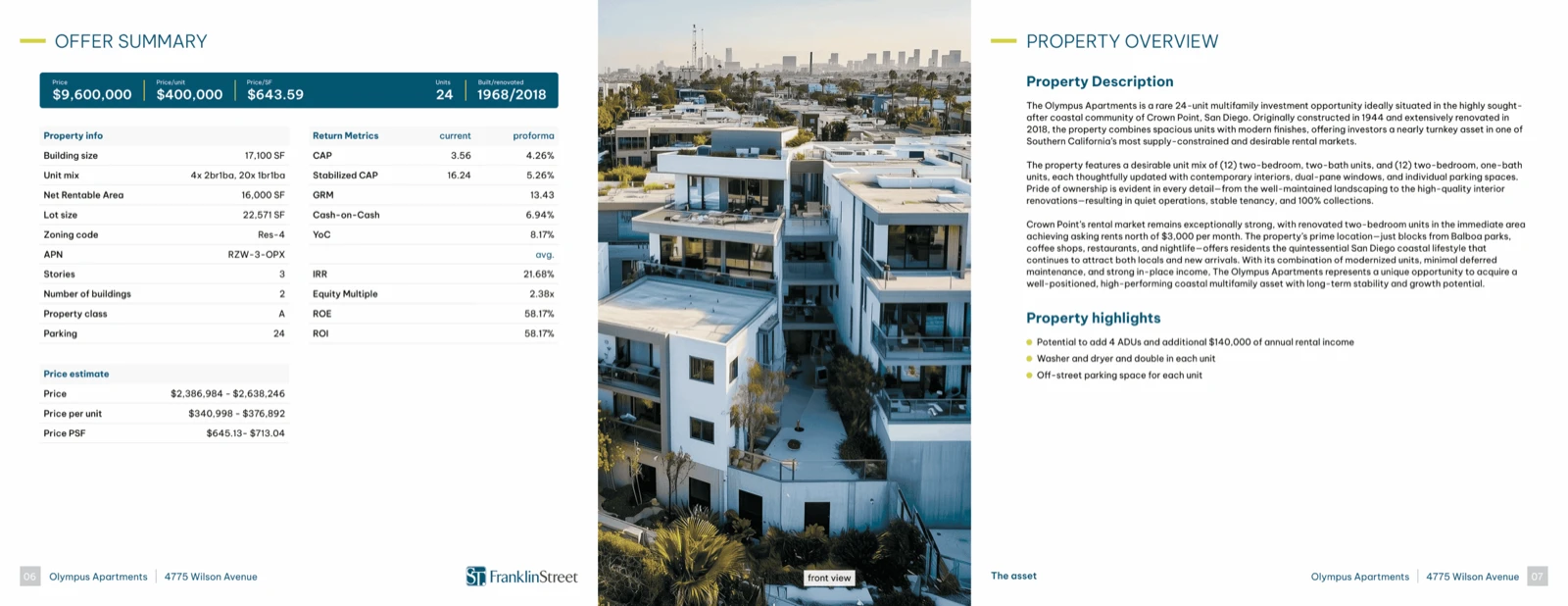
Here is the scenario that illustrates exactly how this plays out. A broker closes a $6.8M multifamily deal on a Thursday. That afternoon, they spend 40 minutes writing a LinkedIn post from scratch. It gets 11 likes and two comments. Three weeks later, they forward the OM to a prospective seller. That document — the one already sitting in their sent folder — contained the asset story, the investment thesis, the market context, the rent roll narrative, and three compelling statistics about submarket vacancy. Everything they needed for 15 posts was already written. They just did not see it that way.
Content is not a task that lives outside your deal workflow. It is the byproduct of the deal work you are already doing. The repurposing mindset means you never start from scratch because you already did the hard thinking when you built the OM, ran the BOV, and closed the transaction. You are not creating new content — you are translating existing insight into new formats for new audiences at new moments in the deal lifecycle.
Start applying this framework to your next deal before marketing begins. The content plan should be built the same week you take the listing.
The deal story as the trunk: your single source of truth
Before you repurpose anything, you need one master document. Call it the deal story. It is a single internal brief — two to three pages — that captures every piece of raw material a deal generates. This is the trunk of your content tree. Every post, email, and market report you produce will branch off from here.
Your deal story document should capture six components: the investment thesis (why this asset, why now, why this submarket), the deal metrics (price, price per square foot, cap rate, days to close, occupancy at close), the market context (submarket vacancy, rent trends, comparable transactions within 12 months), the buyer profile (what type of buyer purchased and what drove their decision), the deal narrative (what challenges arose, how they were resolved, what made this transaction distinct), and three to five quotable statistics that would mean something to an owner, investor, or prospect in this submarket.
This document does not need to be polished. It is not client-facing. It is your content extraction layer — the place you go when you need to build the post, email, or market snapshot quickly. The goal is to front-load the thinking so every subsequent content piece requires only formatting, not ideation.
Most brokers already have the raw material for this document. The offering memorandum contains the investment thesis and deal metrics. The BOV contains the market context and comparable data. Your closing notes contain the deal narrative. The deal story is not new research — it is consolidation. You are taking what already exists in three or four separate documents and pulling it into one accessible brief.
When you have a deal story document in hand, every content decision becomes a retrieval problem, not a creative problem. Instead of asking "what should I post about?" you ask "which part of this deal story maps to LinkedIn post format seven?" That question takes two minutes to answer. The original question can take an entire afternoon. Build the deal story first — everything else in this guide depends on it.
The LinkedIn repurposing tree: 8 post types from one listing
LinkedIn is where most brokers start their repurposing effort, and for good reason — it is the channel where deal context converts directly into professional credibility. But most brokers make the same mistake: they describe the deal instead of extracting the insight from the deal.
A post that says "Excited to announce we just closed 123 Main Street at a 5.8% cap rate" reaches the people who already know you. A post that says "This submarket just crossed 2.1% vacancy. Here is what that means for owners who have been sitting on the fence" reaches everyone in the submarket who has skin in the game — including the owner two blocks away who has been thinking about selling for six months.
Here are the eight LinkedIn post types that every deal generates, with a description of how to execute each one.
- Investment thesis hook post: Written before launch, this teases the opportunity without revealing the address. Lead with the market condition, not the property. "Industrial vacancy in this corridor is at a 10-year low. We have a value-add opportunity coming to market that fits the profile exactly — send me a DM if you want first look." This generates inbound before you blast the OM.
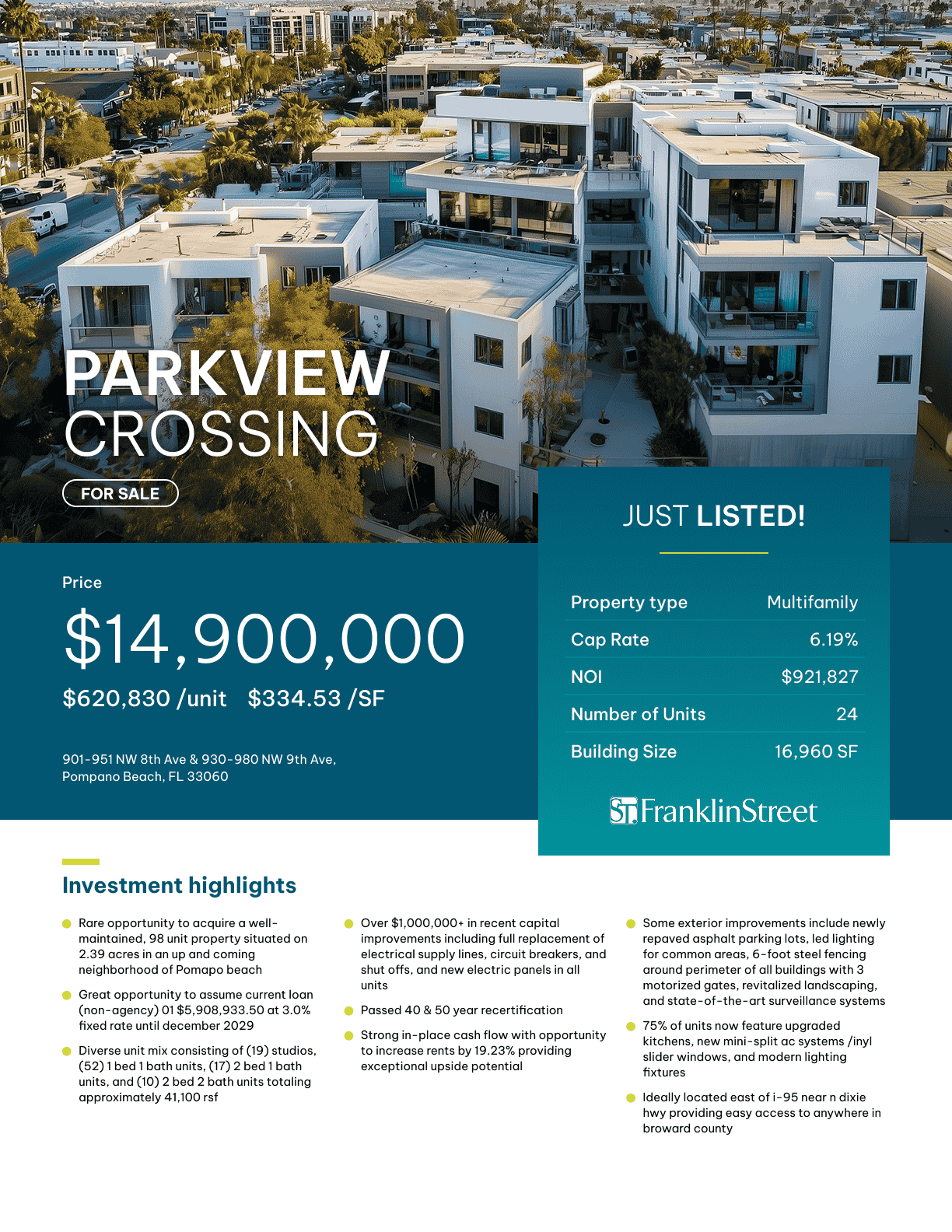
- Launch day deal announcement: Straightforward, factual, direct. Property type, submarket, key metrics, how to get the OM. Keep it under 200 words. The goal is clarity, not creativity.
- Key deal highlight: This is your insight post. Pull one statistic from your deal story — vacancy rate, rent growth, absorption trend — and explain what it means for owners or investors in the submarket. The deal is a data point, not the subject.
- Buyer perspective post: After closing, write from the buyer's point of view. What were they looking for? What made this asset match their buy-box? "1031 buyers in this price range prioritize three things right now: long-term leases, below-market rents with upside, and proximity to specific infrastructure. Here is how this deal checked all three." This attracts sellers with similar assets.
- Lessons learned post: One genuine observation from the transaction. What surprised you? What would you do differently? What does this deal tell you about where the market is heading? This is your highest-engagement post format because it is human and specific.
- Deal close announcement with metrics: Not just "we closed" — include the metrics. Days to close, number of offers, price relative to ask, occupancy rate. These specifics signal market expertise in a way that generic announcements never do.
- Market commentary post using the deal as a data point: Zoom out. Use this transaction as evidence for a broader market argument. "We have now closed three industrial deals in this submarket in 90 days. Here is the pattern I am seeing across all three." This is the post that builds your reputation as a submarket expert, not just a transaction broker.
- Behind-the-scenes post: Tell the story of one specific challenge from this deal — a financing complication, a difficult inspection, a competitive bidding situation — and how it resolved. Specificity is what makes this post feel real. Vague "it was a tough deal but we got it done" posts waste the opportunity. Name the obstacle and walk through the solve.
Eight posts, one deal. Each one serves a different audience segment and a different moment in the trust-building cycle with prospects. The deal story document you built in section two contains the raw material for all eight.
Email: turning deal metrics into newsletter content and follow-up sequences
Email works differently from LinkedIn. Your list already knows you — they opted in, they have seen your name in their inbox before, and they are reading with a different level of attention. That means email content can be more specific, more data-heavy, and more directly tied to the transaction without losing the reader.
The deal generates two parallel email tracks: the deal-specific sequence tied to this listing, and the evergreen newsletter content that references the deal as a data point long after closing.
For the deal-specific sequence, you need five emails minimum. The coming-soon email goes to your buyer list before the OM is ready — two to three sentences, the submarket and asset class, and a "reply if you want first look" call to action. The launch email delivers the OM with a two-paragraph summary of the investment thesis. Follow-up one arrives five to seven days later with a market update framing why the timing matters. Follow-up two arrives near the offer deadline with a factual urgency note — number of tours completed, interest level, timeline. The deal close announcement goes to your full list and functions as a credibility deposit for your next listing.
For evergreen newsletter use, the closed deal becomes a recurring reference point. The investor quarterly update that goes out 60 days after close references the transaction as a market data point alongside two or three other recent comparables. It is not a deal announcement anymore — it is market intelligence, and the deal is the evidence.
One frequently overlooked email format is the owner prospecting email triggered by a close. When you close a deal, you now have a comparable that is directly relevant to every owner of a similar asset in that submarket. "We just closed 123 Main Street at $285 per square foot — I pulled the data on your building and wanted to share what the math looks like for your property." That is a warm outreach email, not a cold one, and the deal is what makes it warm.
IntellCRE systematises the deal summary that powers these sequences — so the metrics, the investment thesis narrative, and the market context are already captured before you write the first email. Use the Content Calendar Guide to schedule when each email and post goes out across your 30-day window. With that foundation in place, you are filling in a template, not writing from scratch.
Five deal emails plus two to three newsletter references equals seven to eight email pieces from one transaction. Each one compounds the perceived expertise of the broker who sent them.
Long-form: converting deal data into market reports, submarket snapshots, and thought leadership
Every closed deal is a primary source. You have first-hand data — actual transaction pricing, actual days on market, actual buyer demand signals — that nobody outside your deal team has access to. That makes your deal the foundation of credible long-form content that market observers, investors, and property owners will actually read.
The submarket snapshot is the most reusable long-form format a broker can build. It runs 600 to 900 words, covers three to five data points about the submarket (vacancy, absorption, average cap rate, recent transaction volume), and references your deal as one of the data points. The snapshot is not a deal announcement — it is a market report that uses your deal as evidence. Post it to your website. Send it as a PDF to your investor list. Reference it in BOV presentations as current market research. Update it every quarter with new transactions.
The BOV feedback loop is a less obvious but highly valuable long-form repurposing channel. When you close a deal, you have a real comparable that validates or updates every BOV you have previously delivered on similar assets in the same submarket. A one-page addendum to prior BOV recipients — "This is what the market told us when we went to close on a comparable asset" — is a high-value touchpoint that keeps you in front of potential sellers without a hard ask.
The case study is the deepest form of long-form repurposing. A full before-and-after write-up — what the property looked like at intake, what the marketing strategy was, how the market responded, what the final outcome was — becomes a durable resource that lives on your website, gets referenced in pitch meetings, and builds compounding credibility over time. One case study per quarter is enough to build a library within a year that closes deals on its own.
Finally, the year-end recap is a format most brokers underuse. Twelve deals, summarized in one document, with the key metric from each transaction — price, cap rate, submarket, days to close. This single piece of content is simultaneously a LinkedIn post, a PDF for seller meetings, a page on your website, and an email to your full list. Build it in December from the deal story documents you have been building all year, and it takes three hours instead of three days.
The throughline across all long-form content is the same: your first-hand transaction data is the credibility driver that makes everything readable. Analysts and bloggers can cite Costar. You can cite your own closed deal.
The repurposing calendar: 30 pieces from one deal in under an hour
Here is the full breakdown — thirty specific content pieces from a single OM and closed transaction. Map these against a timeline and you have a 30-day calendar. Build this calendar the week you take the listing and you will never face a blank screen again.
- LinkedIn: Investment thesis hook post (pre-launch teaser)
- LinkedIn: Launch day deal announcement
- LinkedIn: Key deal highlight ("This submarket has 2.1% vacancy — here's what that means for owners")
- LinkedIn: Buyer perspective post ("What a 1031 buyer looks for in this asset class")
- LinkedIn: Lessons learned post (after close)
- LinkedIn: Deal close announcement with metrics
- LinkedIn: Market commentary post using the deal as a data point
- LinkedIn: Behind-the-scenes post (the negotiation, the challenge, the win)
- Email: Coming-soon email to buyer list
- Email: Launch-day OM blast
- Email: Follow-up #1 (market update + deal status)
- Email: Follow-up #2 (urgency/deadline)
- Email: Deal close announcement (builds credibility for next deal)
- Email: Investor update (quarterly market insight referencing the deal)
- Market report: Submarket snapshot referencing the transaction as a data point
- BOV content: Use the comp to inform future BOV analyses
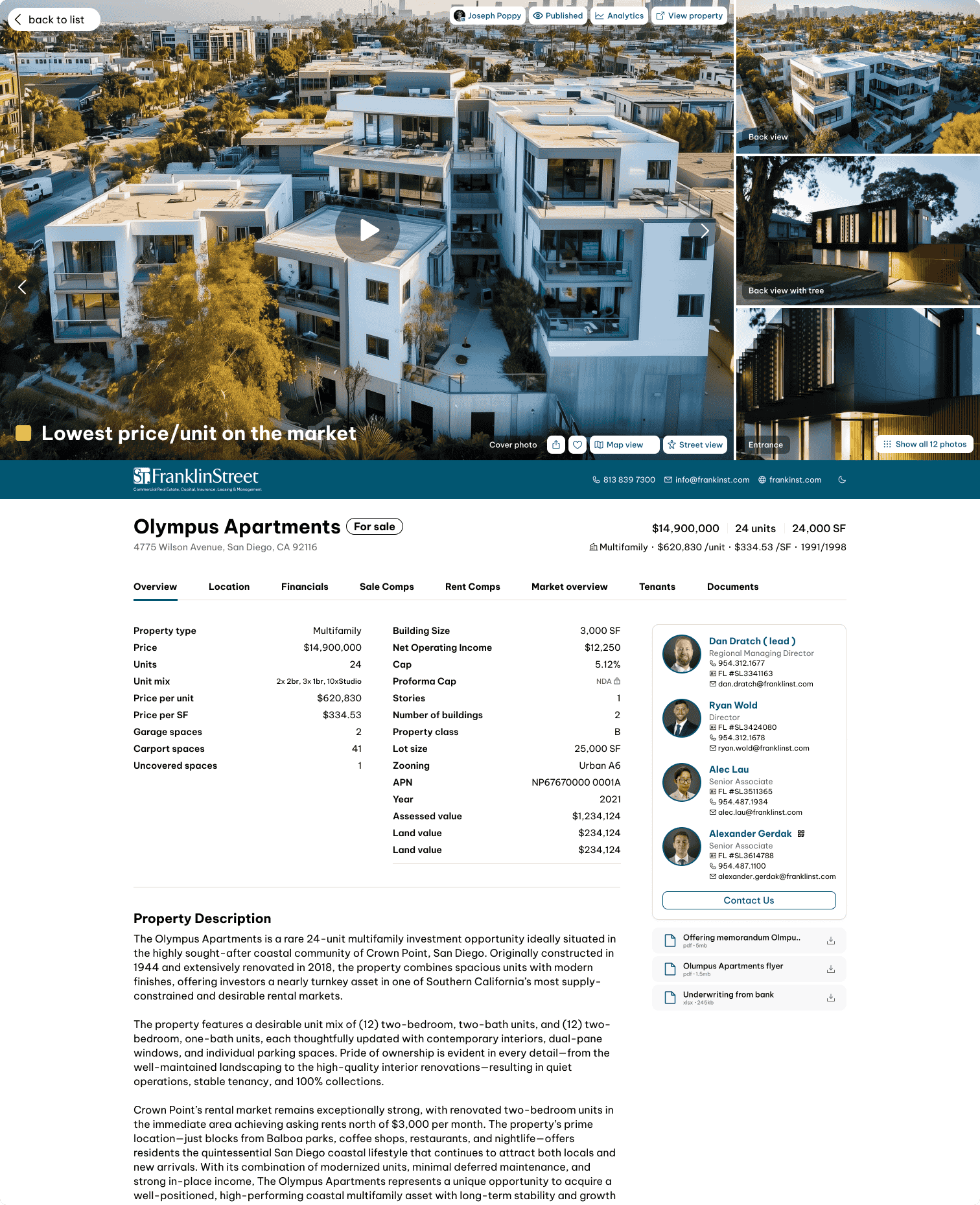
- Listing website copy (repurposes OM investment thesis)
- Flipbook/digital OM (same content, different format)
- Social graphic: Key deal stat (cap rate, price/SF, days to close)
- Social graphic: Submarket vacancy stat
- Social graphic: Deal close announcement card
- Short-form video script: 60-second deal story walkthrough
- Podcast/audio talking points: 5-minute deal debrief
- Pitch deck slide: Transaction added to track record slide
- Owner prospecting email: Reference the deal as a comparable ("We just closed a similar asset at X cap rate")
- Investor intro email: "This deal matched your buy-box — here's what sold it"
- Cold outreach hook: "I just sold the building next to yours at $X/SF"
- Newsletter feature: Monthly deal spotlight
- Year-end recap: One of 12 transactions in an annual summary post
- Case study: Full before/after write-up for your resource library
To build the 30-day calendar in under an hour, do this: open your deal story document and assign each of the 30 items above to a specific date, starting from listing day. LinkedIn posts go out every three to four days. Deal-sequence emails follow their natural timeline (pre-launch, launch, follow-up one, follow-up two, close). Long-form pieces — the submarket snapshot, the case study — slot into the post-close window when deal urgency has passed but market relevance is still high. Graphics and video scripts get queued for the weeks when you have no email or post scheduled.
One closed transaction contains enough raw material for 90 days of consistent content when you work the full repurposing tree. Most brokers extract four or five pieces before moving on. The difference between four pieces and thirty is not more time — it is a system that tells you exactly what to build next and where to find the source material to build it from.
Build the deal story. Map the 30 pieces. Schedule the calendar the week the listing goes live. By the time you close, half the content is already done.
Frequently asked questions
How much time does repurposing actually save compared to writing original content?
The average broker spends 45 or more minutes writing original content per piece because they are generating the idea and the draft simultaneously. Repurposing from a deal story document cuts that to 10–15 minutes per piece because the thinking is already done — you are translating existing insight into a new format, not creating from scratch. Over a 30-piece content plan, that is roughly 15 hours saved per deal.
Do I need to wait until a deal closes to start repurposing?
No. Twelve of the thirty pieces in the repurposing calendar are designed for the pre-close window — the investment thesis teaser, the launch announcement, the coming-soon email, the listing website copy, the OM itself. Repurposing starts the week you take the listing, not the week you close it. The deal story document should be built at intake so content can begin immediately.
What if the deal falls through before it closes?
A deal that does not close still generates market intelligence. The submarket data, the buyer demand signals, the pricing feedback from the marketing process — all of that is usable content. A "what the market told us" post that reports honestly on a failed or relisted deal often outperforms a close announcement because it is rare and credible. Do not let a dead deal kill a content plan.
How do I repurpose without sounding repetitive to my audience?
Each of the thirty pieces reaches a different audience in a different context. Your LinkedIn followers are not the same people as your investor email list. Your owner prospecting targets are not reading your newsletter. The same deal data presented as a LinkedIn insight post versus a BOV addendum versus a cold outreach hook is functionally different content for functionally different readers. Repetition is only a problem if the same person receives the same message in the same format twice — and that is a distribution problem, not a content problem.
Which pieces should I prioritize if I only have time to build ten of the thirty?
Prioritize the eight LinkedIn posts, the five deal-sequence emails, and the submarket snapshot. That covers the three channels with the highest leverage for a working broker: professional credibility with your network, direct outreach to your active buyer and investor list, and a long-form asset that compounds over time. The remaining twenty pieces are high-value but optional — layer them in as your system matures.