


Every commercial real estate investment comes down to a few numbers: what it costs, what it earns, what it’s worth on exit, and what could go wrong. Investment and analysis software exists to get you to those numbers quickly and defensibly, so you can screen more deals, pass on the bad ones faster, and move with confidence on the good ones.
The catch is that “real estate investment software” covers a huge range: deal-analysis tools, institutional modeling suites, data platforms, and the investor-management systems syndicators use to run their capital. This guide compares the best real estate investment and analysis software for commercial investors in 2026, explains which job each tool actually does, and shows how to match the software to your strategy.
Investment, analysis or investor software? Three searches, three jobs
People search for this category three ways, and they usually mean different things:
- Commercial real estate analysis software underwrites a specific deal: rent roll and operating statement in, value, returns and risk out.
- Real estate investment software is the umbrella term. It covers analysis tools plus the market data and screening that feed them.
- Real estate investor software often means investor management: raising capital, onboarding investors, distributions and reporting. It’s the back office of a syndication or fund.
Most commercial investors use the first two every week. Syndicators and fund managers need the third as well. The list below covers all three, and the table shows which job each tool does.
How we evaluated
- Returns modeling: IRR, cash-on-cash, equity multiple, equity waterfalls, and sensitivity analysis.
- Deal screening speed: how quickly you can go from a listing to a go/no-go read.
- Market data quality: built-in comps, rents, and cap rates, and how current and complete they are, versus data you have to supply.
- AI leverage: how much of the analysis the tool does for you.
- From analysis to action: whether the numbers flow into the materials you need to raise capital, market, or close.
- Integrations and support: whether it fits your existing tools and how quickly your team gets productive.
- Price and fit: individual investor through institutional shop.
Quick comparison
| Software | Main job | Returns modeling | Built-in market data | AI-assisted |
|---|---|---|---|---|
| IntellCRE | Deal analysis + investor and marketing materials | Deep | Yes | Yes |
| Archer | Multifamily deal analysis at scale | Deep (multifamily) | Yes | Yes |
| ARGUS Enterprise | Institutional DCF valuation | Deepest | No | Limited |
| DealCheck | Quick deal analysis | Solid | Recent comps | Limited |
| Juniper Square | Investor and fund management | Fund reporting, not deal modeling | No | Not the focus |
| CoStar / data platforms | Market and comp research | No (data, not modeling) | Yes | Limited |
| Excel / spreadsheets | Custom models | As deep as you build | No | No |
The best real estate investment & analysis software in 2026
1. IntellCRE: best overall for investors who analyze and package their own deals
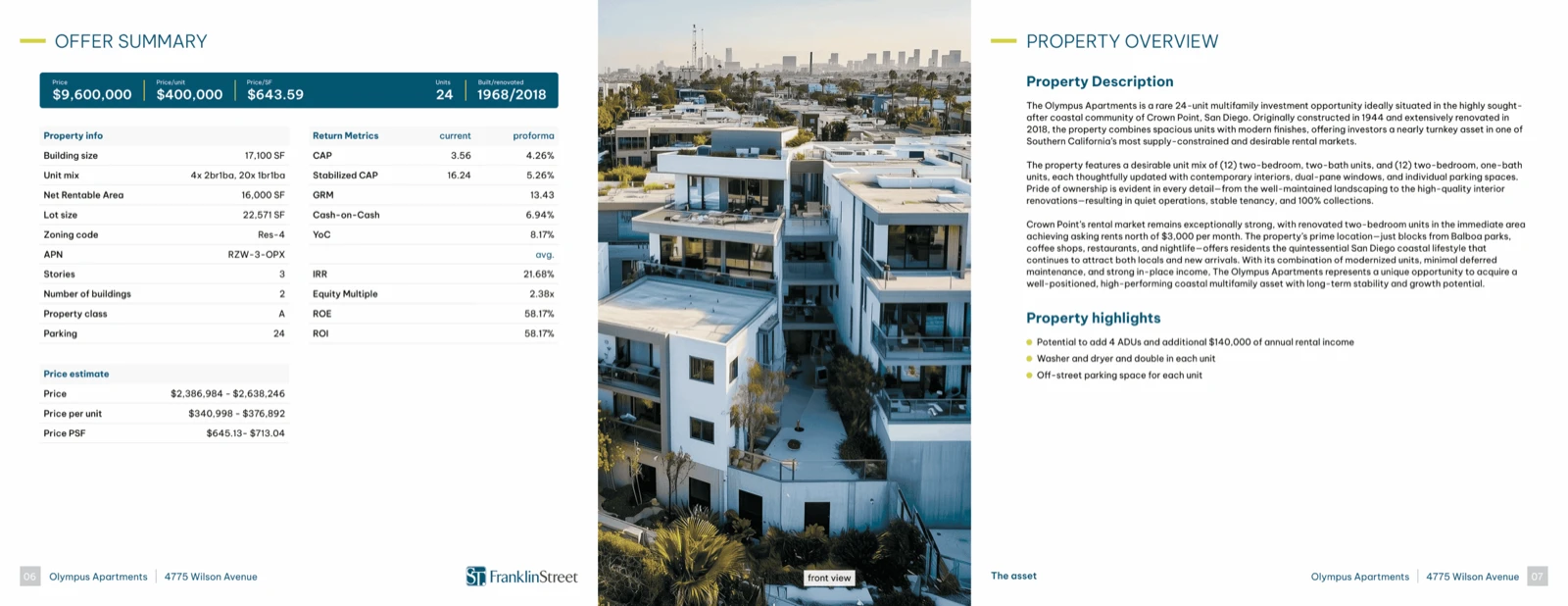
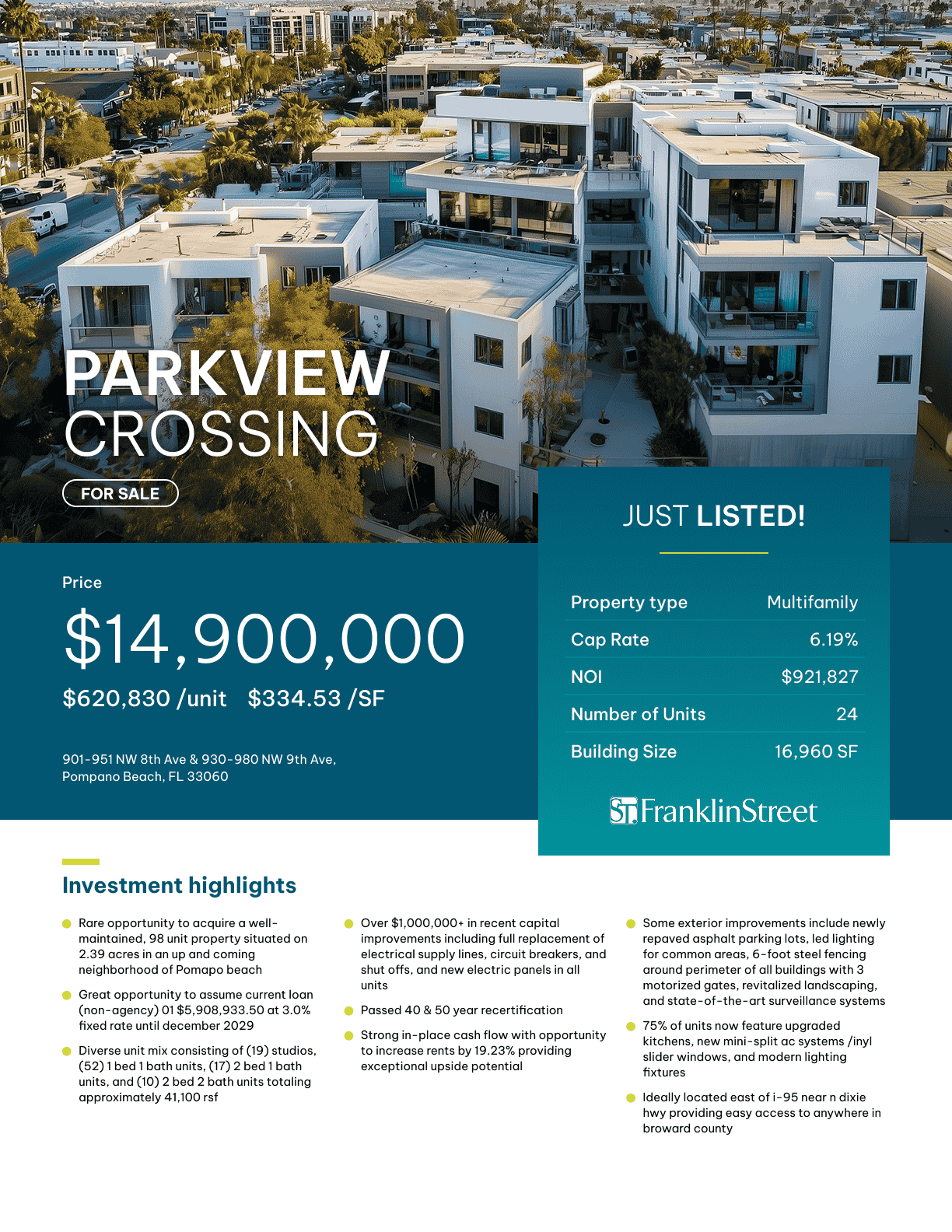
IntellCRE combines AI-assisted deal analysis with built-in market data and automated deal materials. On the analysis side you get sensitivity analysis, equity waterfalls, exit cap rate prediction, creative financing scenarios, and custom assumptions, along with debt metrics like DSCR and loan-to-value. On the output side, the same analysis becomes offering memorandums, broker opinions of value, brochures, pitch decks, and listing websites.
For an investor, that matters in two places: screening and storytelling. Built-in comps, rents, and cap rates mean you can underwrite a new opportunity without assembling data by hand. When a deal is worth raising capital for or listing, the pitch materials come straight out of the same model, on-brand and ready to send. Users report saving roughly 14 hours per deal across the analyze-and-market workflow. IntellCRE also publishes free CRE market reports for the top 50 U.S. metros.
Strengths: deep, AI-assisted returns modeling; built-in market data; the one tool on this list that turns your analysis directly into investor- and market-ready materials.
Consider if: you want one system for the numbers and the narrative, rather than a modeling tool plus a separate design workflow.
For a closer look at the modeling side, see our guide to the best commercial real estate underwriting software.
See IntellCRE analyze and package a deal →
2. Archer: multifamily acquisitions at volume
Archer helps multifamily investors source, screen, and underwrite deals at scale. It parses offering memorandums, T-12s, and rent rolls into a first-pass underwrite backed by a large nationwide rent and sale comp layer, with an Excel add-in and API for analysts who want to keep their own model.
Strengths: deep multifamily data and fast, repeatable screening; genuinely AI-native.
Trade-offs: multifamily only, so mixed-asset strategies fall outside it, and it stops at the acquisition funnel rather than the capital-raise or marketing materials.
3. ARGUS Enterprise: institutional-grade valuation
ARGUS Enterprise (Altus Group) is the institutional standard for lease-level discounted-cash-flow valuation, particularly on office, retail, and complex mixed-use assets. Funds, REITs, and lenders often require it. As of 2026 it is no longer sold standalone; Altus is moving subscriptions onto the ARGUS Intelligence Platform.
Strengths: the deepest DCF modeling; expected by institutional counterparties.
Trade-offs: costly, a steep learning curve, and no built-in market data or output materials.
4. DealCheck: fast first-pass analysis
DealCheck is an accessible analysis app, used by more than 350,000 investors and agents according to the company. It calculates cap rate, cash-on-cash return, cash flow and dozens of other metrics, and it can pull recent sales and rental comps for a property. It’s built mainly around rentals, flips and small multifamily, though it handles commercial buildings too.
Strengths: quick, affordable, easy to learn, and available on web and mobile; good for rapid go/no-go screening.
Trade-offs: lighter on the lease-level modeling and market depth that larger commercial deals demand, and no deal materials beyond its reports.
5. Juniper Square: investor management for syndicators and funds
If “investor software” to you means running the capital rather than analyzing the deal, Juniper Square is the category leader. It handles fundraising, investor onboarding, distributions, reporting and fund administration, with an investor portal for statements and tax documents. The company says more than 2,000 private-markets GPs use it.
Strengths: a mature investor portal, LP reporting, and fund administration at scale.
Trade-offs: it manages investors and funds, not deals, so you still need an analysis tool to decide what to buy. It’s also priced for established fund managers rather than individual investors.
6. CoStar and market-data platforms: research, not modeling
CoStar and similar data platforms are where many investors research markets, comps, and availabilities. They’re a data source rather than an analysis engine.
Strengths: broad market and comp coverage.
Trade-offs: you take the data into a separate tool to actually model returns and produce materials.
7. Excel and spreadsheets: maximum control
Custom spreadsheets remain the default for many investors, with total flexibility to model any structure. The cost is time, version control, and formula risk on every new deal.
Strengths: fully customizable, with no per-seat cost.
Trade-offs: slow at volume, error-prone, no built-in data, and nothing carries into your capital-raise or marketing materials.
How to choose, by investor type
- Active investor screening many deals: prioritize speed and built-in data so you can underwrite quickly and pass fast. If you also raise capital or list, favor a tool that produces the materials too.
- Multifamily specialist at scale: prioritize data depth and repeatable screening.
- Syndicator or fund manager raising capital: deal analysis alone isn’t enough. Pair an analysis tool, to decide which deals to buy, with investor-management software like Juniper Square to run the capital behind them.
- Institutional shop: expect to run ARGUS-grade valuation for counterparties, often alongside a faster tool for first looks.
- Occasional or highly custom deals: a strong spreadsheet may be enough; just account for the time and error risk.
The real leverage in investment software isn’t just a faster IRR. It’s compressing the whole path from “interesting listing” to “packaged, fundable deal.” Tools that connect analysis, market data, and output materials shorten that path the most.
Frequently asked questions
What is real estate investment software?
Software that helps you analyze a property’s financial performance, modeling income, expenses, financing, returns (IRR, cash-on-cash, equity multiple) and risk, so you can decide whether and how to invest.
What is commercial real estate analysis software?
Software that underwrites a specific commercial property. It takes the rent roll, operating statement and financing terms, then calculates value, returns, debt metrics like DSCR and loan-to-value, and how sensitive the deal is to changes in rent, rates or exit cap rate.
What’s the difference between real estate investor software and analysis software?
Analysis software helps you decide whether to buy a deal. Investor software, often called investor management or fund administration software, helps you run the capital behind it: raising money, onboarding investors, distributions and reporting. Syndicators and fund managers usually need both.
What’s the best software for analyzing commercial real estate deals?
It depends on your strategy. IntellCRE is the strongest all-around pick for investors and brokers who want AI-assisted analysis, built-in market data, and automated deal materials in one place. Institutional teams often need ARGUS for valuation, and multifamily specialists lean on Archer.
Is free or spreadsheet-based analysis good enough?
For occasional or highly custom deals, yes. For repeatable analysis at volume, or whenever the output has to become a polished document, purpose-built software is faster and more reliable.
Related reading: CRE software: the complete guide
Want to analyze and package your next deal in one place? Book an IntellCRE demo →