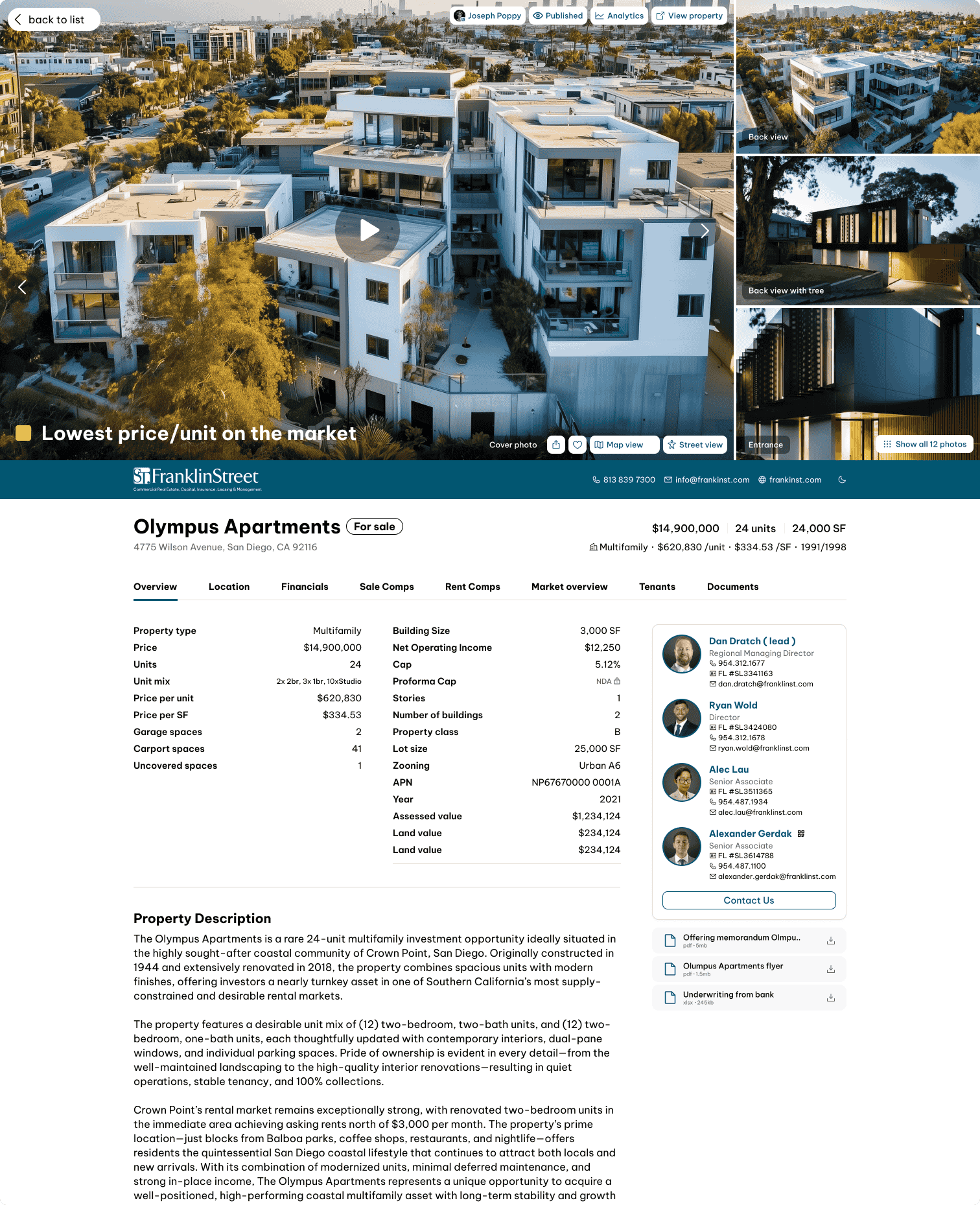



Choosing the right CRE software can mean the difference between winning listings and losing deals. With a sea of options available, understanding what to look for is crucial for commercial real estate professionals aiming to gain a competitive edge.
1. Define Your Core Needs
Before diving into the software landscape, pinpoint your specific requirements. Here are key areas to consider:
- Data Access: Determine whether you need access to comprehensive market data or just specific property insights. A tool that offers real-time data can help you close deals 49% faster.
- Collaboration Features: Evaluate how the software supports team collaboration. Look for tools that enhance visibility across teams, allowing for streamlined communication and decision-making.
- Reporting Capabilities: Assess the reporting features. A platform that generates reports in minutes can significantly reduce your time spent on administrative tasks, enabling you to focus on client relationships.
2. Assess User Experience
A user-friendly interface can dramatically impact your team’s productivity. When evaluating software, consider:
- Ease of Navigation: Does the software have an intuitive layout? A clean interface minimizes the learning curve and boosts adoption rates across your brokerage.
- Integration Options: Check if the software integrates seamlessly with your existing tools. This can enhance your overall workflow and save time across various tasks.
- Customer Support: Investigate the level of customer support offered. Responsive support can be a lifesaver when you encounter issues that could stall your operations.
3. Evaluate Market Intelligence
Market intelligence is a cornerstone of successful commercial real estate transactions. Here’s what to look for:
- Data Accuracy: Ensure that the software provides reliable and up-to-date information. Inaccurate data can lead to poor decision-making and lost opportunities.
- Analytical Tools: Look for platforms that offer robust analytical capabilities. Tools that allow you to perform comparative market analyses can empower you to present compelling case studies to clients.
- Customizable Dashboards: A customizable dashboard can help you track key metrics at a glance, enabling faster responses to market changes.
4. Consider Scalability
Your chosen software should grow with your brokerage. Keep these factors in mind:
- Feature Expansion: As your business evolves, will the software’s features expand to meet new demands? Scalability can prevent the need for a costly transition to another platform.
- Team Size Flexibility: Ensure the software can accommodate your team size, whether you’re a small startup or a large firm. A scalable solution can support your growth without sacrificing performance.
- Cost-Effectiveness: Evaluate the long-term value of the software. Investing in a scalable solution can yield significant returns as you close more deals and expand your operations.
5. Analyze Customer Feedback
Finally, don’t underestimate the power of peer reviews. Here’s how to leverage customer feedback:
- Case Studies: Look for success stories from other brokerages. They can provide insights into how the software has enhanced productivity and deal closure rates.
- Online Reviews: Explore platforms where users share their experiences. Pay attention to common themes in feedback, both positive and negative, to gauge overall satisfaction.
- Trial Offers: Take advantage of trial periods. Testing the software firsthand can help you assess its fit for your team’s workflow and needs.
In the competitive world of commercial real estate, having the right software can be your secret weapon. IntellCRE offers a powerful solution designed to streamline your processes, enhance team collaboration, and provide actionable market insights. Discover how IntellCRE can elevate your brokerage’s performance by visiting IntellCRE.