


Underwriting is where a commercial real estate deal is won or lost. Get the assumptions right and you price the asset correctly, spot the risk early, and move faster than the next bidder. Get them wrong — or spend three days rebuilding the same spreadsheet — and the deal is gone. The right software collapses that work from days to minutes, without hiding the math.
But “underwriting software” covers everything from a $60/month calculator to a six-figure institutional modeling suite. This guide compares the best commercial real estate underwriting software in 2026, who each tool is really for, and where each one is strong or weak — so you can pick the one that fits how you actually work.
How we evaluated
We weighed each tool on the things that matter once you’re using it every day:
- Speed to a credible number — how fast you get from an address or rent roll to a defensible valuation.
- Modeling depth — sensitivity analysis, equity waterfalls, exit cap prediction, creative financing.
- AI leverage — how much of the grunt work the software does for you versus a blank spreadsheet.
- Data — whether market comps, rents, and cap rates come built in or you supply them.
- What happens next — does the analysis flow into the marketing materials (BOV, OM, brochure) you have to produce anyway?
- Price and fit — solo broker and small team versus institutional shop.
Quick comparison
| Software | Best for | AI-assisted | Built-in market data | Underwriting → marketing |
|---|---|---|---|---|
| IntellCRE | Brokers & investors who market what they underwrite | Yes | Yes | Yes — BOV, OM, brochure, listing site |
| ARGUS Enterprise | Institutional DCF cash-flow modeling | Limited | No | No |
| Archer | Multifamily acquisitions at scale | Yes | Yes (multifamily) | No |
| Henry AI | Brokers producing OMs, BOVs & deal decks | Yes | Partial | Partial — documents, not full marketing |
| Rockport VAL | DCF valuation (ARGUS alternative) | Limited | No | No |
| Dealpath | Pipeline & deal management | Limited | No | No |
| Excel / spreadsheets | Maximum flexibility, full control | No | No | No |
The best CRE underwriting software in 2026
1. IntellCRE — best overall for brokers and investors who market what they underwrite
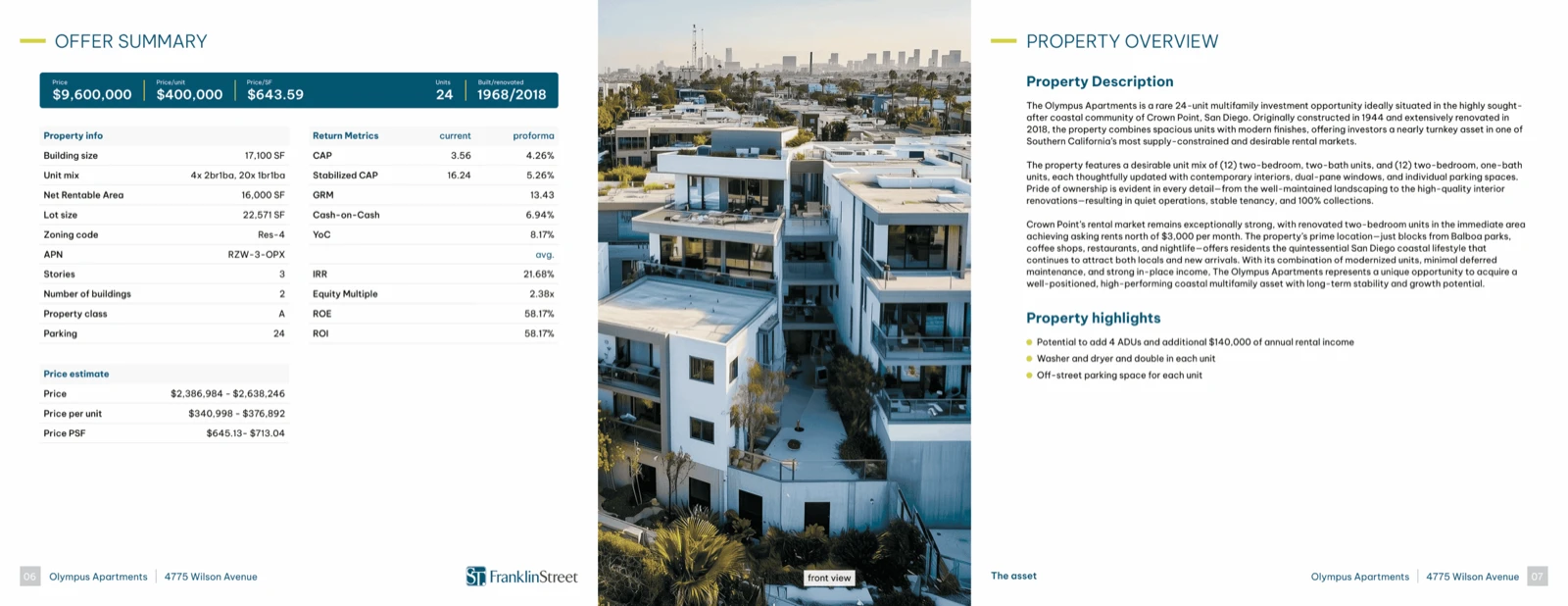
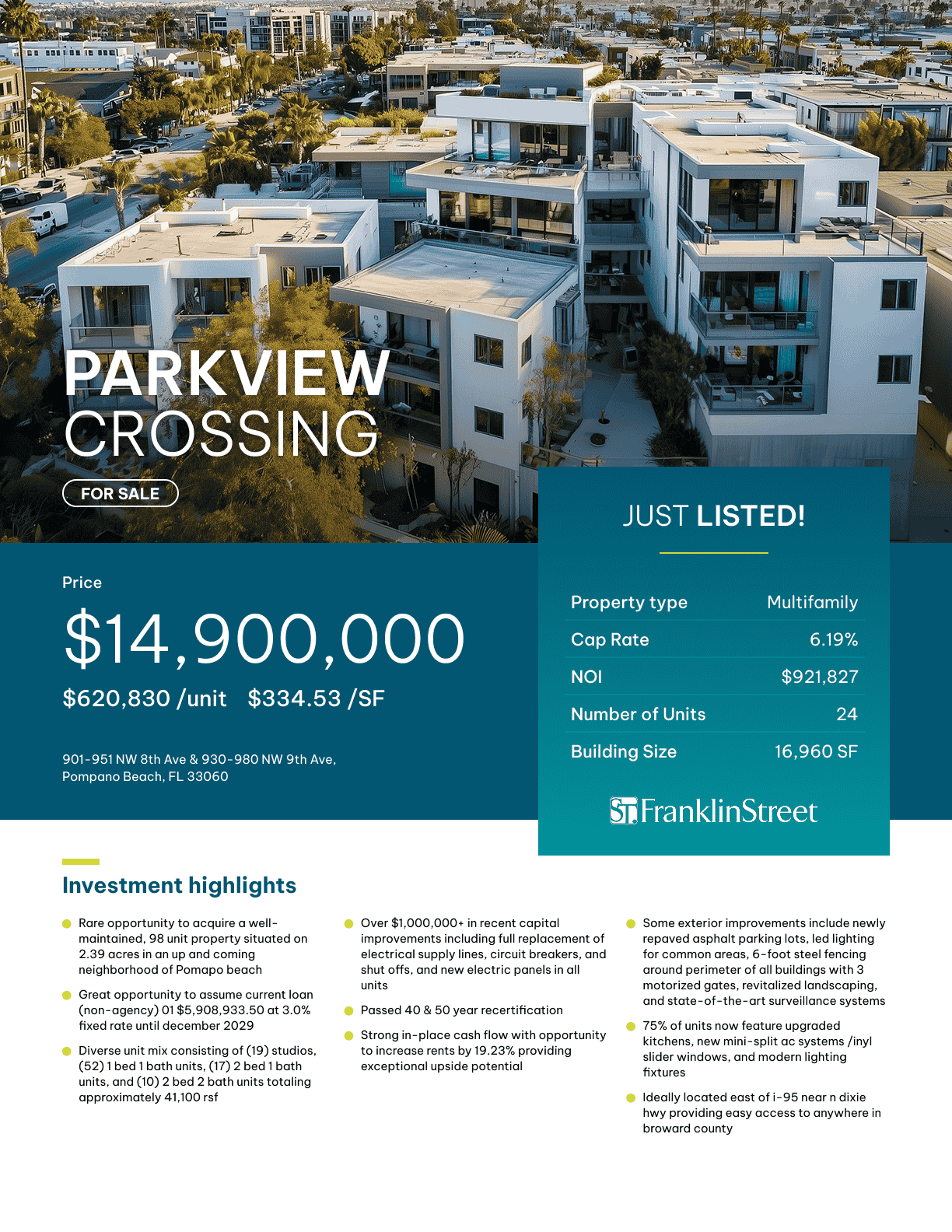
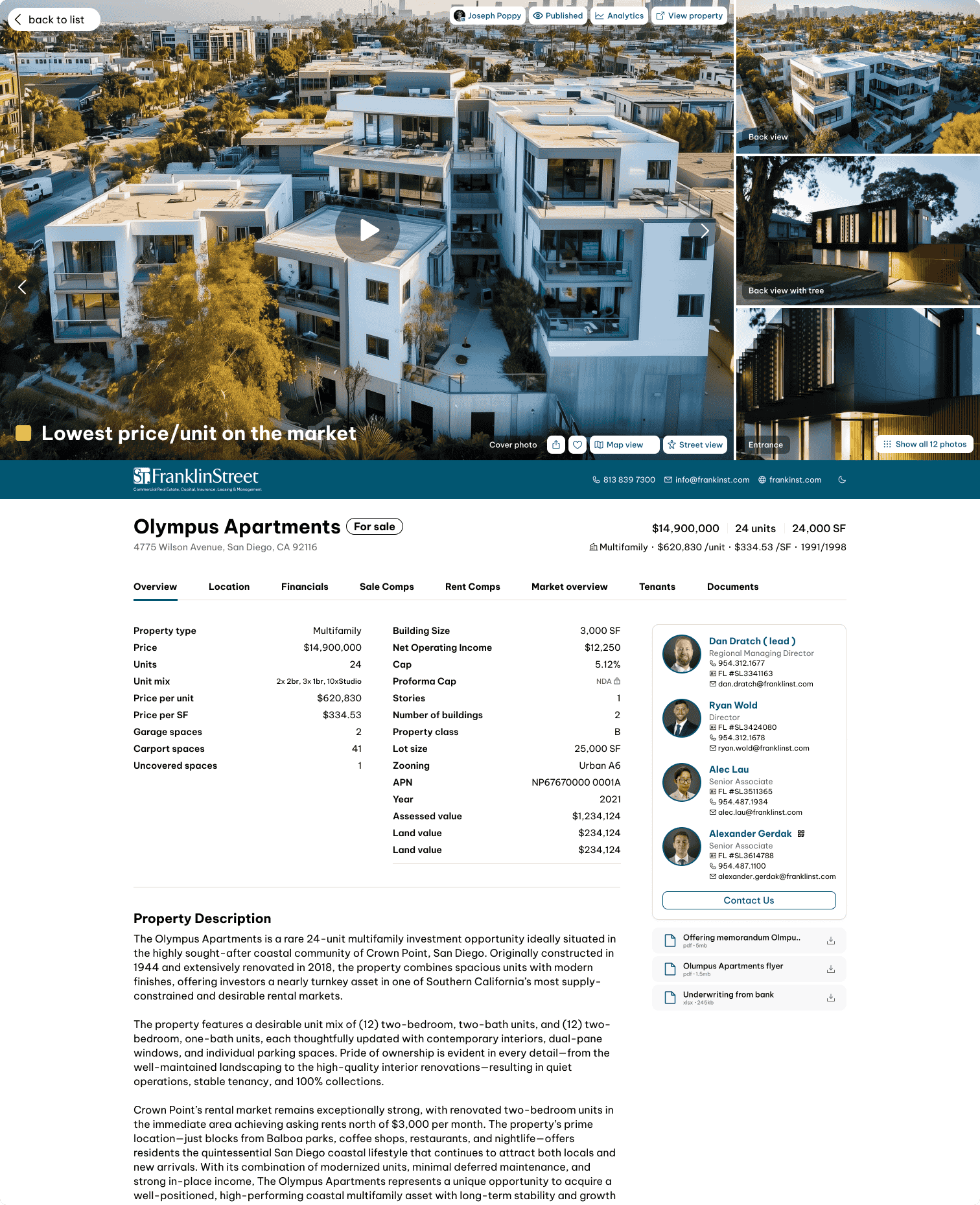
Most underwriting tools stop at the model. IntellCRE keeps going. It runs the analysis — sensitivity analysis, equity waterfalls, exit cap rate prediction, creative financing scenarios, and custom assumptions — and then turns that same underwriting into the marketing materials you’d otherwise build by hand: broker opinions of value, offering memorandums, proposals and pitch decks, brochures, flyers, flipbooks, and listing websites.
That “analyze → market in one place” loop is the reason IntellCRE tops this list. The number that comes out of your underwriting is the same number that goes into the OM, on-brand and ready to send. The company reports users saving on the order of 14 hours per deal on the analysis-and-materials workflow, and the platform ships with market data so you’re not sourcing comps, rents, and cap rates from five browser tabs.
Strengths: AI-assisted underwriting paired with automated, on-brand marketing assets; built-in market data; fast from raw inputs to a client-ready deliverable; fits both individual brokers and teams.
Consider if: you want the underwriting and the pitch to come out of one system instead of stitching a modeling tool to a design tool. It’s built for the deal-doer, not for pure back-office asset management.
See how IntellCRE underwrites and markets a deal in minutes →
2. ARGUS Enterprise — the institutional cash-flow standard
ARGUS Enterprise (Altus Group) is the long-standing standard for institutional discounted-cash-flow modeling, especially on office, retail, and mixed-use assets with complex leases. If you’re at a fund, REIT, or lender where investment committees expect an ARGUS file, it’s effectively table stakes. Note that as of 2026 ARGUS Enterprise is no longer sold as a standalone product — Altus is migrating subscriptions onto the unified ARGUS Intelligence Platform.
Strengths: deep, granular lease-level DCF modeling; widely accepted by institutional counterparties.
Trade-offs: steep learning curve, significant cost, and no built-in market data or marketing output — it’s a modeling engine, not an end-to-end deal tool.
3. Archer — multifamily acquisitions at scale
Archer is aimed at multifamily investors sourcing and screening a high volume of deals. It parses offering memorandums, T-12s, and rent rolls to produce a first-pass underwrite, pulling rent and sale comps from a large nationwide data layer. An Excel add-in and API let analysts keep their own model while using Archer’s data.
Strengths: fast, repeatable first-pass multifamily underwriting with a deep built-in comps layer.
Trade-offs: multifamily only — mixed-asset firms fall outside it — and it’s built for the acquisition funnel, not for producing the marketing side of a deal.
4. Henry AI — AI-generated deal documents for brokers
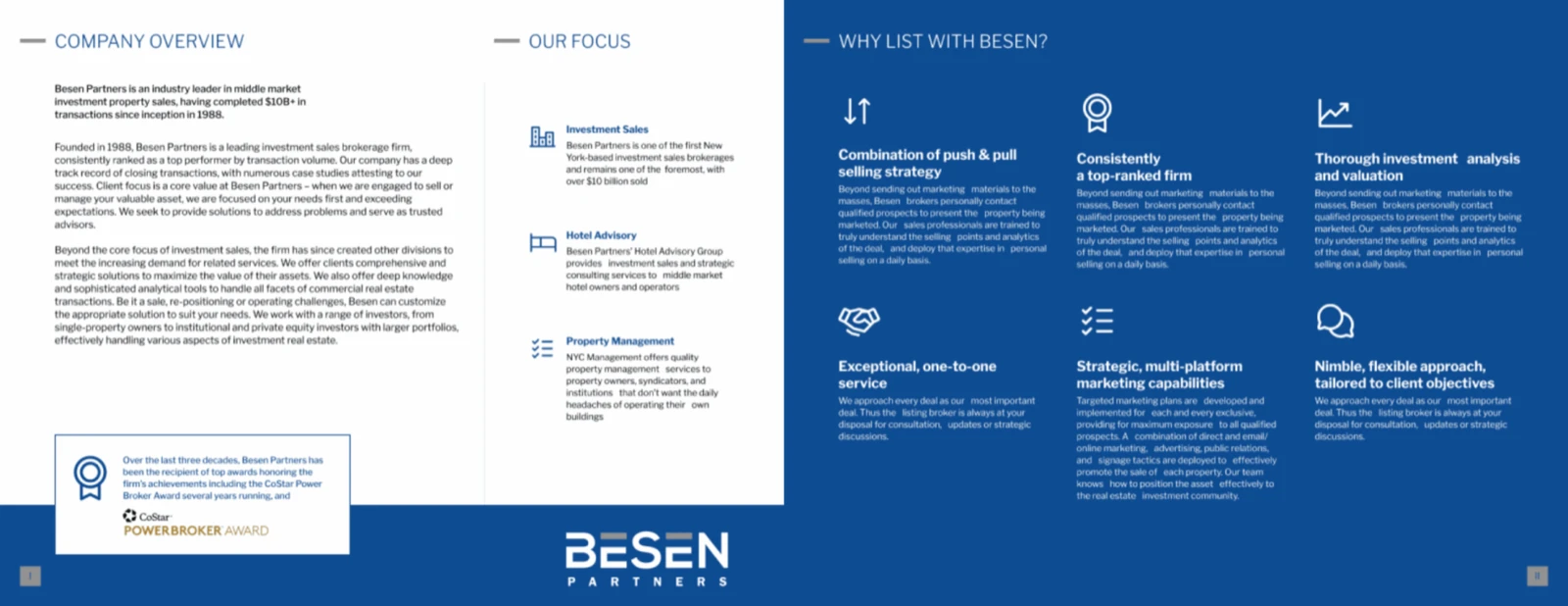
Henry AI is the closest direct competitor on the document side. Its platform generates offering memorandums, broker opinions of value, comps, underwriting models, and marketing teasers from existing Excel models and property data, turning work that took analysts days into minutes of review. In July 2026 it raised a $16.5M Series A and launched Henry Deal, extending from document automation into full deal management, and reports 150+ firms on the platform.
Strengths: fast, institutional-grade deck and document production; strong funding and traction; now spans deal management as well as documents.
Trade-offs: Henry largely works from a model you bring it — it ingests your existing Excel underwriting rather than generating the analysis itself. If you want the underwriting produced for you, and you need the wider marketing set (branded brochures, flyers, flipbooks, listing websites) plus built-in market data in one system, that’s the gap IntellCRE fills.
5. Rockport VAL — a DCF alternative to ARGUS
Rockport VAL is a cloud-based DCF valuation tool positioned as a more accessible alternative to ARGUS for cash-flow modeling.
Strengths: capable DCF modeling at a friendlier entry point than ARGUS.
Trade-offs: like ARGUS, it’s a valuation engine — no built-in comps or marketing output.
6. Dealpath — deal and pipeline management
Dealpath is deal-management software: it centralizes pipeline, tasks, and documents so a team can track opportunities and collaborate. It’s adjacent to underwriting rather than a modeling tool itself.
Strengths: excellent for pipeline visibility and team coordination on many concurrent deals.
Trade-offs: you’ll pair it with an actual underwriting tool; it doesn’t produce the valuation or the marketing materials.
7. Excel and spreadsheets — the flexible incumbent
Purpose-built spreadsheets remain the most common underwriting tool in CRE, and for good reason: total flexibility and control. The cost is time and risk — every deal is a manual rebuild, version control gets messy, and a single broken formula can misprice an asset.
Strengths: infinitely customizable; no per-seat software cost; universally understood.
Trade-offs: slow, error-prone at volume, no built-in data, and nothing carries into your marketing materials.
How to choose the right underwriting software
- Solo broker or small team that also markets deals: prioritize speed and the underwriting-to-marketing handoff. A tool that outputs a client-ready BOV or OM from the same model saves the most time per deal.
- Multifamily acquisitions at volume: prioritize data coverage and repeatable screening.
- Institutional fund, REIT, or lender: you likely need ARGUS-grade DCF for counterparties, possibly alongside a faster tool for first-pass screening.
- Occasional or highly custom deals: a well-built spreadsheet may still be the pragmatic choice — just budget for the time.
The biggest hidden cost in underwriting isn’t the software subscription — it’s the hours between “I have a number” and “I have a document I can send.” If you’re a broker or investor who has to produce the marketing anyway, the tools that connect underwriting directly to those deliverables pay for themselves the fastest.
Frequently asked questions
What is commercial real estate underwriting software?
It’s software that helps you estimate a commercial property’s value and risk — modeling income, expenses, financing, and returns — so you can price a deal, decide whether to pursue it, and support the number with analysis.
What’s the difference between underwriting software and a financial modeling tool like ARGUS?
Tools like ARGUS and Rockport VAL are focused DCF modeling engines. Broader underwriting platforms like IntellCRE add built-in market data, AI assistance, and — in IntellCRE’s case — automated marketing materials, so the workflow runs from inputs to a client-ready deliverable in one place.
Is there CRE underwriting software that also creates the marketing materials?
Yes. IntellCRE is built specifically around that loop: the same underwriting feeds broker opinions of value, offering memorandums, brochures, and listing websites, on-brand and ready to send.
Do I still need Excel?
For one-off or highly bespoke deals, a spreadsheet can be the right tool. For repeatable underwriting at any volume — and anywhere the output needs to become a polished document — purpose-built software is faster and less error-prone.
Related reading: Multifamily underwriting software & pro forma guide · CRE software: the complete guide
Ready to underwrite and market your next deal in one place? Book an IntellCRE demo →