

Hooks & Headlines Checklist: 12 Tests Before You Post
Run every LinkedIn post, OM header, and outreach subject line through this checklist before it goes out — the first line is the only line that determines if anyone reads the rest.
Key takeaways
- The first 140 characters of a LinkedIn post determine whether anyone clicks "see more" — rewrite until those characters carry the full weight.
- Numbers, specific claims, and information gaps do more work than clever phrasing — build your hook around a real data point or outcome.
- OM headers and email subject lines follow the same rule: lead with the investment thesis or the specific property, never the address or a generic market claim.
- If you would scroll past it as a busy broker getting 50 emails a month, it isn't ready to send.
1. Read only the first 140 characters
LinkedIn truncates posts at roughly 140 characters before the "see more" break. Paste your first line into a character counter and read only what shows. If it doesn't create curiosity or make a specific claim on its own, rewrite it before checking anything else — the rest of the post is invisible until this line earns the click.
2. Make a specific claim or ask a specific question
"The market is shifting" is not a hook. "Industrial vacancy in this submarket just hit 1.8%" is. The more specific the claim — a submarket, a dollar figure, a timeframe — the more credible and compelling it reads to a broker who knows the market. Vague hooks signal vague content; specific hooks signal expertise.
3. Don't start with "I"
LinkedIn posts that open with "I" center the narrator instead of the insight. Readers decide in under two seconds whether this is worth their time — lead with the finding, the number, or the situation, not with yourself. Move "I" to the second sentence if it belongs anywhere.
4. Run the "so what?" test
Read your hook as a skeptical broker who already knows your submarket. If the gut reaction is "so what?", the hook is either not specific enough, not surprising enough, or both. The bar is: would a broker who already thinks they know this market stop scrolling? If not, sharpen the claim.
5. Put a number in it
Numbers stop the scroll in a way that adjectives don't. "3 emails", "$14M deal", "6 weeks", "47 hooks" — any real figure from your deal or your market works. The number creates instant specificity and signals that the rest of the post has substance behind it, not just opinion.
6. Create an information gap
The reader should feel like they're missing something and need to click "see more" to close that gap. The hook raises a question it doesn't immediately answer — a result without the method, a problem without the resolution, a number without the context. If the first line gives everything away, there's no reason to keep reading.
7. Test it on a different submarket broker
The best hooks are specific enough to be credible but universal enough to be relevant beyond your immediate market. Ask yourself: would a broker in a different city, covering a different asset class, still want to know what comes next? If yes, the hook has reach. If it only makes sense to someone in your zip code, broaden the framing slightly without losing the specific data point.
8. Strip jargon the reader didn't ask for
Industry terms your reader uses daily — NOI, cap rate, NNN, rent roll — are fine and build credibility. Marketing jargon nobody uses in a real conversation — "synergistic", "innovative", "value-add solution" — kills trust immediately. If the word wouldn't appear in a deal memo, cut it.
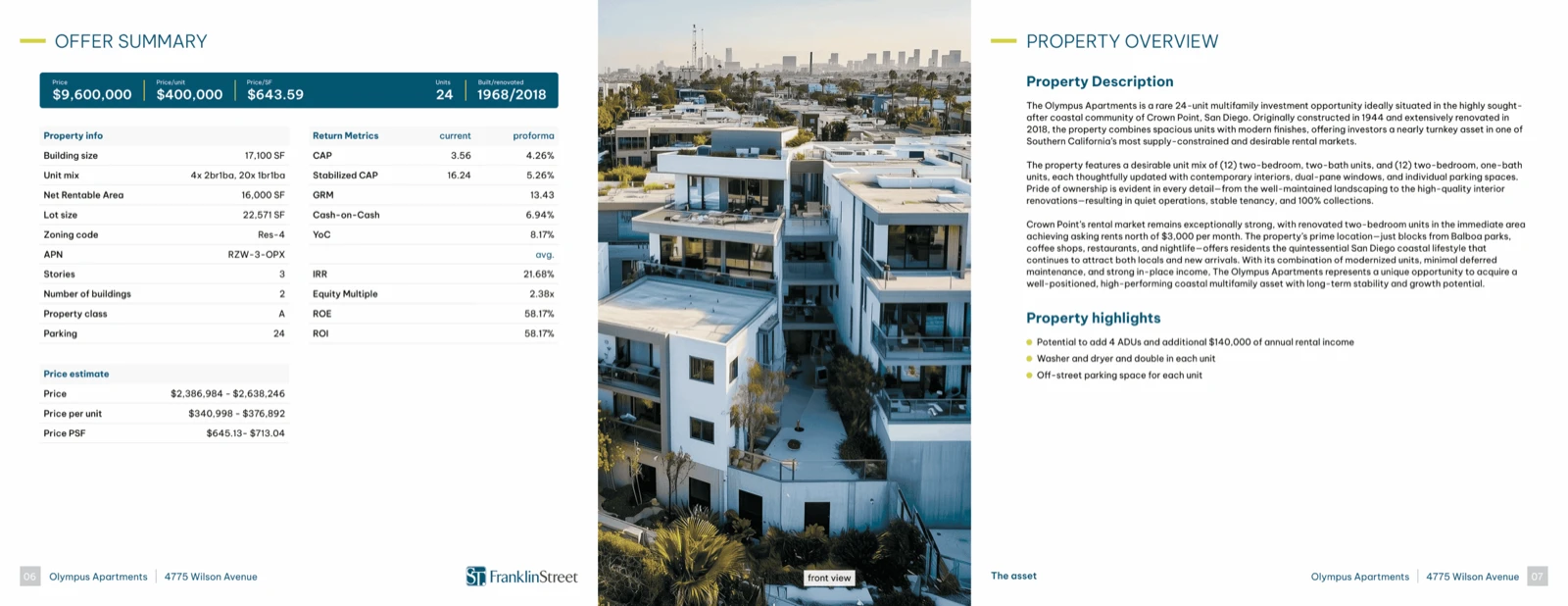
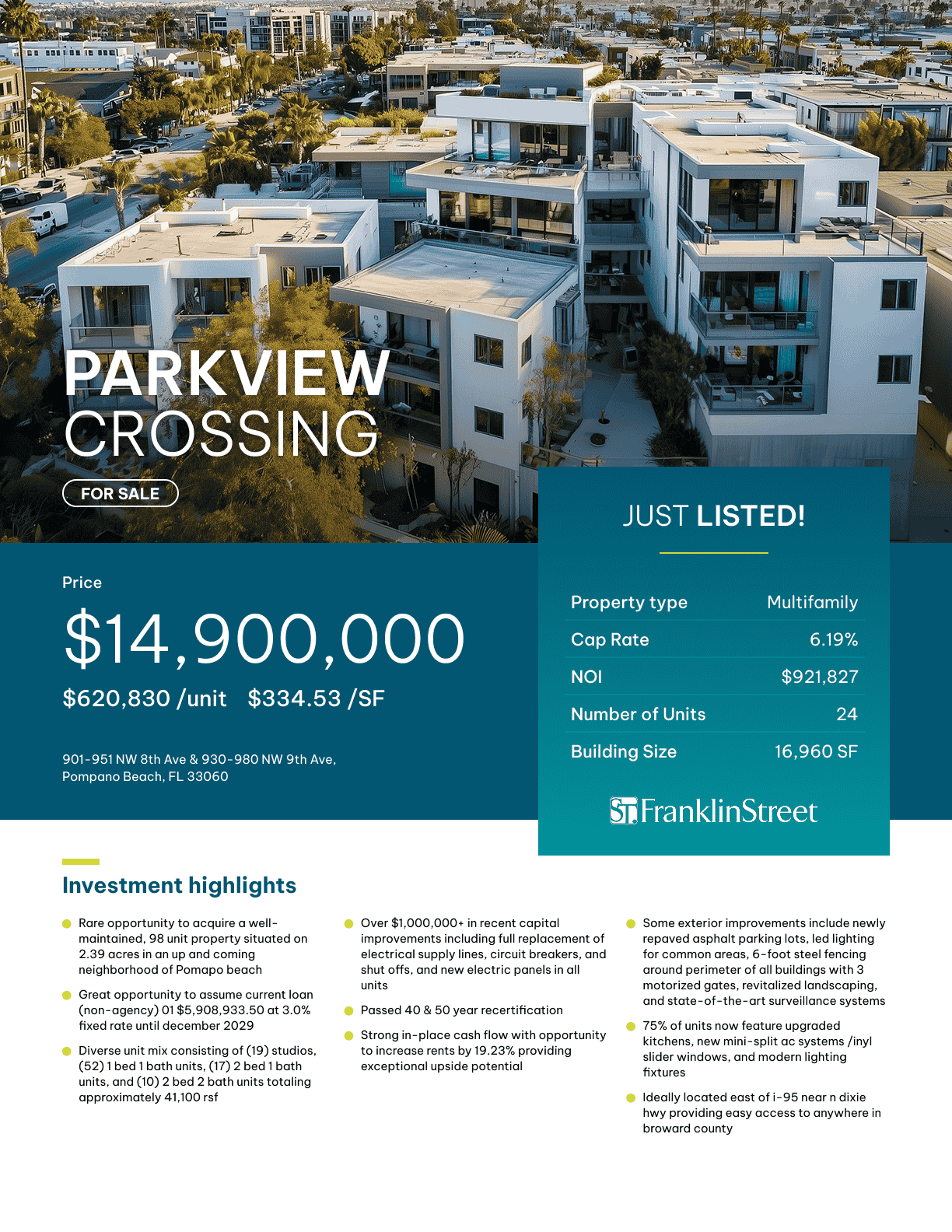
9. OM headers: lead with the investment thesis
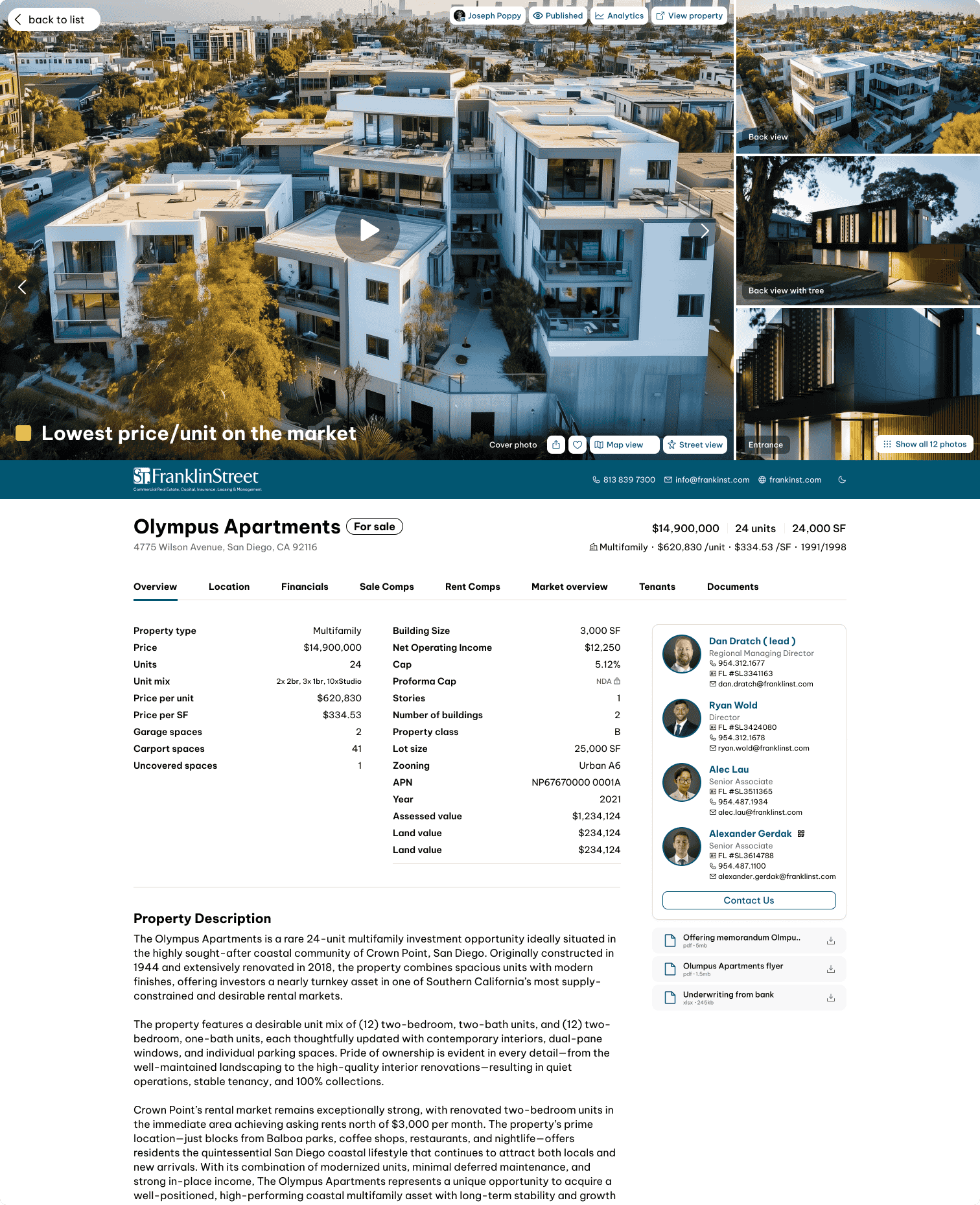
The first line of an offering memorandum header is not the property address — it's the reason to own the asset. "Value-add industrial in an infill location with 18 months of below-market leases" tells an investor what they're buying before they see the address. The address is for due diligence; the thesis is for the hook. With IntellCRE, the investment thesis is auto-generated from your intake form and already positioned as the lead.
10. Email subject lines: under 50 characters, no spam triggers
Subject lines over 50 characters get cut off on mobile and in most email clients. Words like "opportunity", "exclusive", "limited time", and "act now" are either filtered to spam or trained readers to ignore them. Write the subject line as if it's a text from a colleague: short, specific, no sales language.
11. Owner outreach: reference the specific property
Generic market claims ("values in your area are up") read as mass mail because they are. The owner of 1420 Commerce Dr. needs to see 1420 Commerce Dr. in the subject line or first sentence — their specific building, their specific lease expiration, their specific situation. The Owner Prospecting Guide covers the full first-contact framework for owner outreach. One property-specific detail turns a blast into a conversation.
12. Run the "would I read this?" test
You get 50 broker emails a month, your LinkedIn feed is full of market updates, and your inbox has three OM headers in it right now. Read your hook as that person. Would you click? Would you keep reading? If you're being honest and the answer is no, the hook isn't done. This is the final gate — nothing goes out until it passes.
Frequently asked questions
How long should my LinkedIn hook actually be?
Aim for one sentence, two at most, under 140 characters. The goal isn't to pack in everything — it's to create enough tension that clicking "see more" feels necessary. Shorter hooks with a sharp claim outperform longer hooks almost every time. If you need two sentences, make sure the second one raises the stakes rather than explaining the first.
What if my deal doesn't have an interesting number to lead with?
Every deal has a number somewhere useful — days on market, square footage, lease term, price per foot, number of offers, months to close. If none of those are interesting, lead with a process insight from the deal ("The first LOI fell apart in week two. Here's what we did instead."). The hook doesn't have to be the deal metric — it can be the story behind the deal.
Can I use the same hook for LinkedIn, an email subject line, and an OM header?
The same core insight can drive all three, but the format changes. A LinkedIn hook can be 120 characters and conversational. An email subject line needs to be under 50 characters and stripped of any sales language. An OM header should be a declarative investment thesis, not a question. Start with one strong claim, then adapt the format to fit each channel.
Is it worth rewriting a hook more than once?
Yes. Most first-draft hooks are the obvious version — the one everyone would write. The second draft removes the filler. The third draft adds the specific number or inverts the expected framing. Brokers who consistently get engagement on content aren't more creative, they're more willing to rewrite. Run through this checklist once, fix what fails, then read it again cold.
How do I write an owner outreach subject line that doesn't look like spam?
Use the property address or the owner's name, keep it under 40 characters, and make it read like a note from someone who did their homework: "1420 Commerce Dr — lease question" or "Your NNN at Maple Industrial Park". Avoid exclamation points, all caps, and any phrase you'd see in a promotional email. The goal is to sound like a colleague, not a campaign.