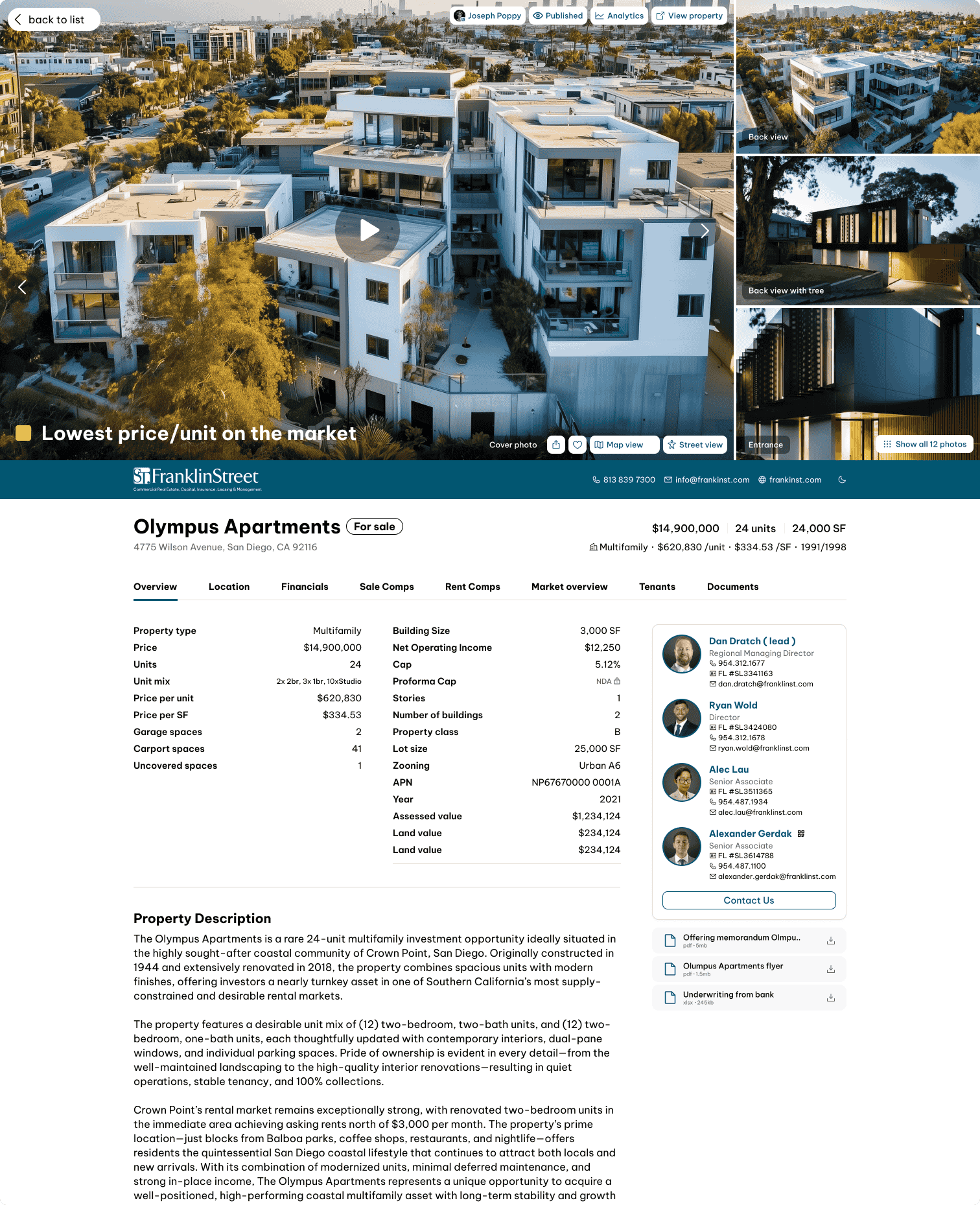


Pre-screening a CRE deal can make or break your investment strategy. By honing in on the right metrics before underwriting, you can save time and resources while increasing your chances of closing profitable deals.
1. Understand the Market Dynamics 📊
Before diving into a deal, assess the market conditions. Look at cap rates in your target area to gauge the potential return on investment. For instance, the median cap rates for Q4 2026 show:
- Multifamily: 7.04%
- Office: 7.13%
- Retail: 6.31%
- Industrial: 6.66%
Understanding these figures helps you identify whether a deal is overpriced or underpriced compared to the market average. A well-priced deal can yield a 49% higher chance of closing successfully.
2. Analyze the Property’s Financials 💰
Next, dig into the property’s financials. Look for key indicators such as:
- Net Operating Income (NOI): This tells you how much income the property generates after operating expenses. A higher NOI boosts your cash flow.
- Debt Service Coverage Ratio (DSCR): A DSCR above 1.25 is often a good indicator that the property can cover its debt obligations.
- Occupancy Rates: High occupancy rates suggest a stable income stream, while low rates may signal potential issues.
For example, a property with an NOI of $200,000 and a DSCR of 1.5 is likely a safer bet than one with lower metrics. This financial clarity can help you filter out deals that don’t meet your investment criteria.
3. Evaluate the Location and Demographics 📍
Location is everything in commercial real estate. Analyze the demographics of the area where the property is situated. Key factors to consider include:
- Population Growth: Areas experiencing growth often see increased demand for commercial space.
- Employment Rates: High employment rates usually correlate with increased consumer spending.
- Accessibility: Properties near major transportation hubs or highways tend to attract more tenants.
For instance, a retail property in a rapidly growing neighborhood may outperform one in a declining area, leading to a significant difference in your bottom line.
4. Conduct a Competitive Analysis 🔍
Understanding your competition is crucial for making informed decisions. Analyze similar properties in the area to evaluate:
- Rental Rates: Are your potential rents in line with competitors? If not, why?
- Lease Terms: Are there any unique lease structures that could impact your investment?
- Tenant Mix: A diverse tenant mix can mitigate risk and enhance stability.
For example, if you find that a competitor’s property is achieving 10% higher rents due to superior amenities, you’ll know to either adjust your expectations or consider investing in upgrades.
5. Leverage Technology for Efficiency ⚙️
Finally, utilize technology to streamline your CRE deal screening process. Tools like IntellCRE can help you:
- Generate a Broker’s Opinion of Value (BOV) in minutes instead of days.
- Access real-time market data to make informed decisions quickly.
- Improve team visibility and collaboration, ensuring everyone is on the same page.
By leveraging technology, you can significantly increase your content output and speed up your deal screening process, giving you a competitive edge in the market.
Ready to enhance your CRE deal screening process? Discover how IntellCRE can empower your brokerage with real-time data and insights. Visit IntellCRE today and start closing more deals with confidence!