
What is a Pitch Deck (CRE)?
A presentation-format document used by brokers to win listing mandates from property owners — and one of the most consistently under-executed documents in commercial real estate.
Key takeaways
- A CRE pitch deck is a presentation prepared by a broker to win a listing assignment from a property owner — it is distinct from an OM, which markets a property to buyers
- The most effective pitch decks answer three questions in order: What is this property worth? How will you market it? Why you specifically?
- Most pitch decks lose before they're finished because they lead with firm credentials instead of the owner's outcome — flip the structure
- An 8–12 slide pitch deck presented in 15 minutes outperforms a 30-slide deck presented in 45 minutes almost every time
The plain-English definition
A pitch deck in the CRE context — sometimes called a broker presentation, listing proposal, or RFP response — is the document a broker uses to win a listing mandate from a property owner. It is typically presented in person or via video call during what the industry calls a "listing interview" or "beauty contest": a meeting where two to four brokerage teams compete for the right to represent the sale of a property.
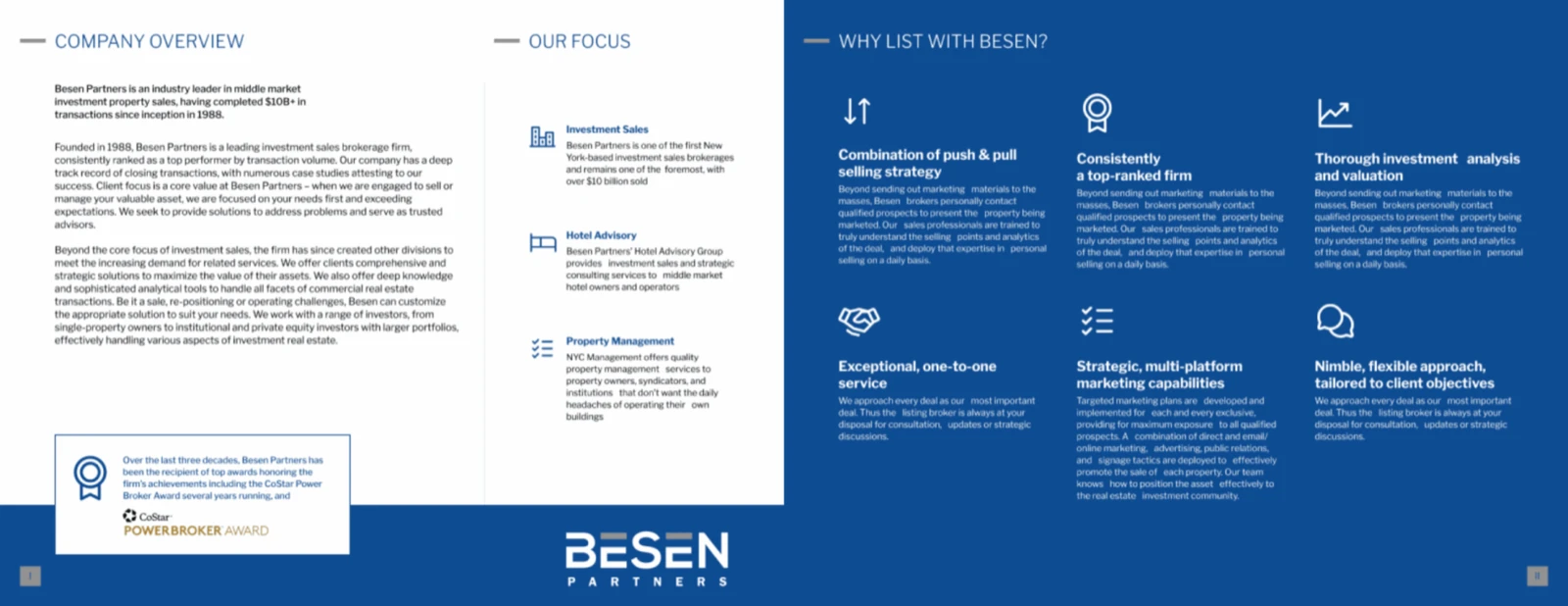
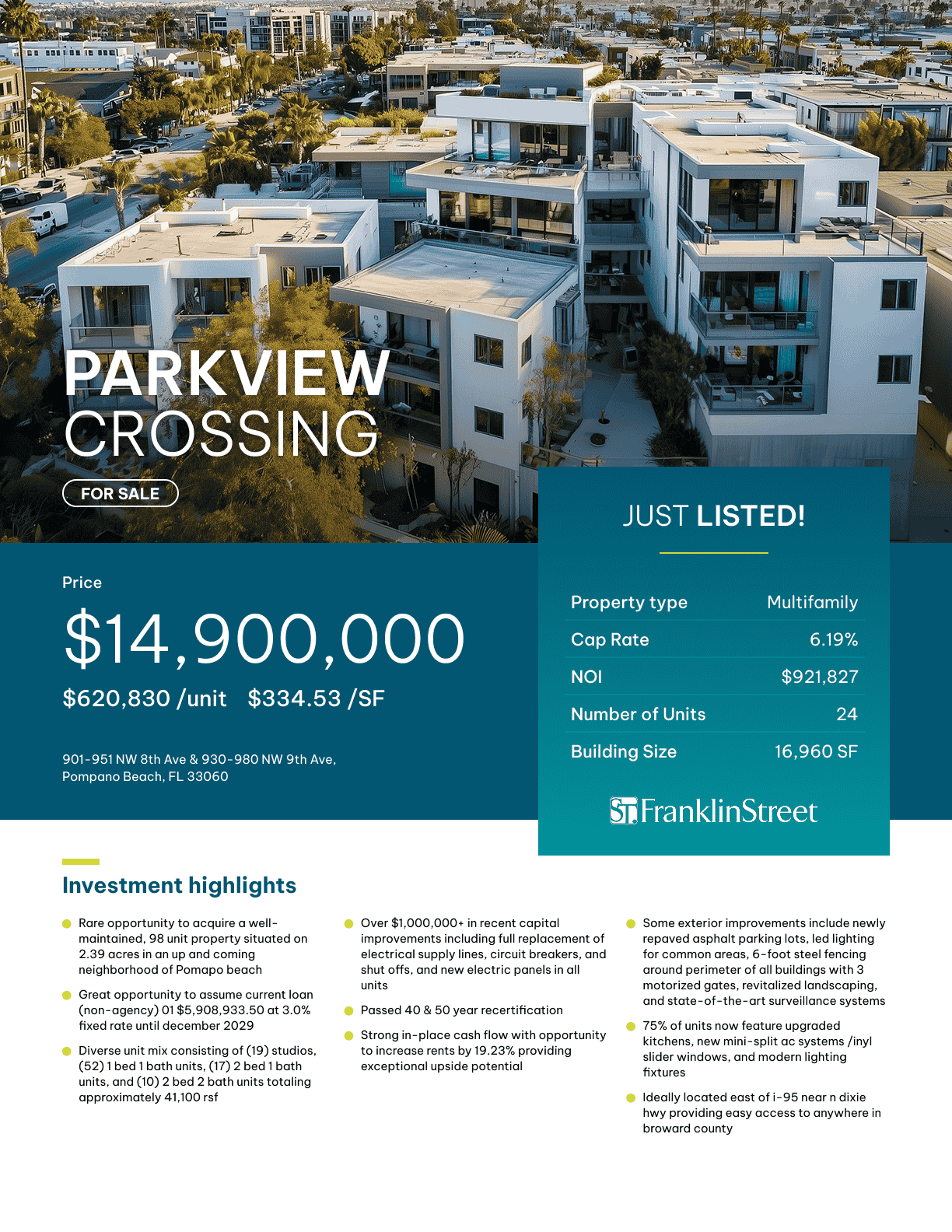
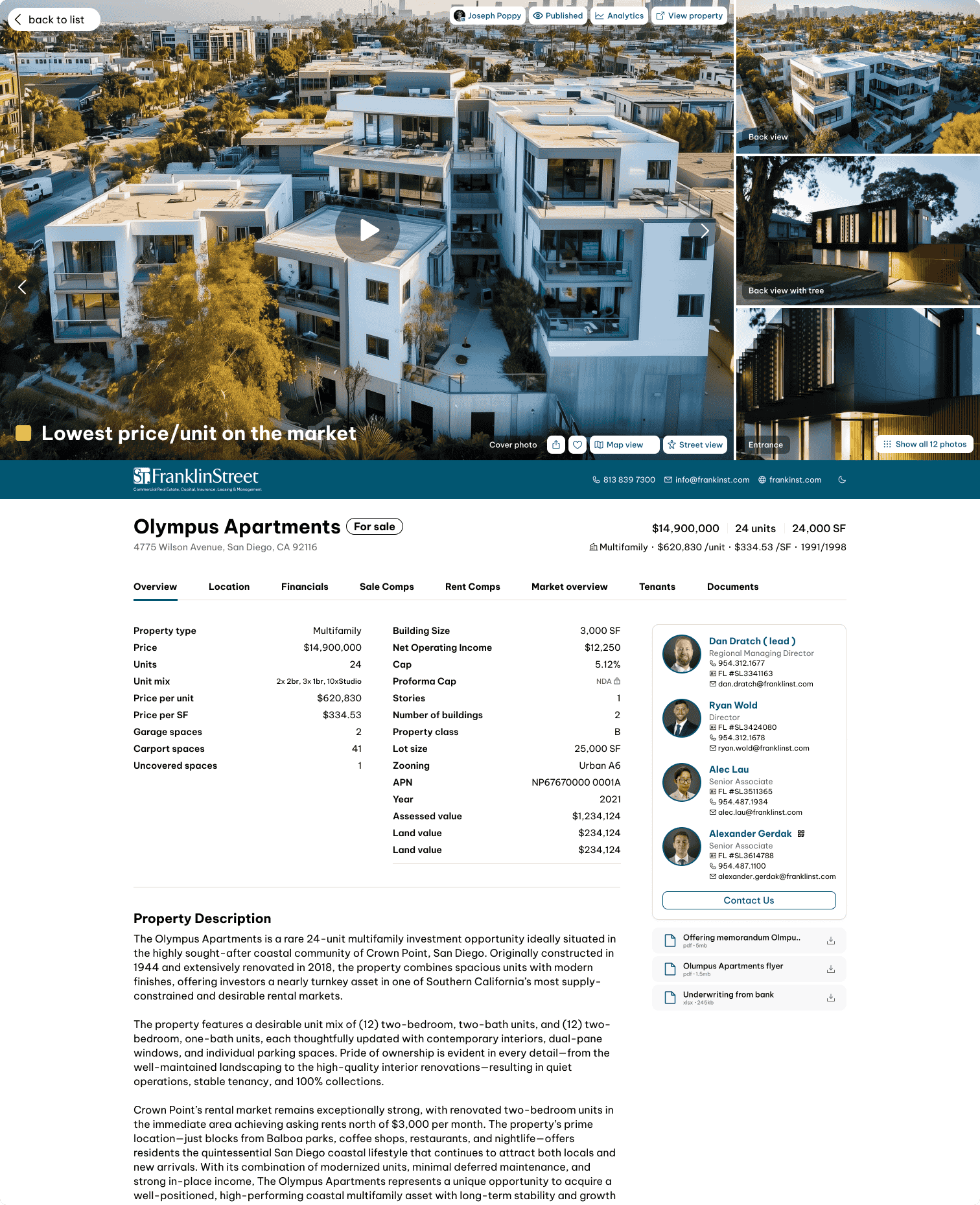
The pitch deck is fundamentally different from the Offering Memorandum. The OM is a document prepared after the listing is won — it markets the property to buyers. The pitch deck is prepared before the listing is won — it markets the broker to the owner. Conflating the two is a common mistake that results in brokers who lead their pitch with property data the owner already knows instead of the strategy the owner is trying to evaluate.
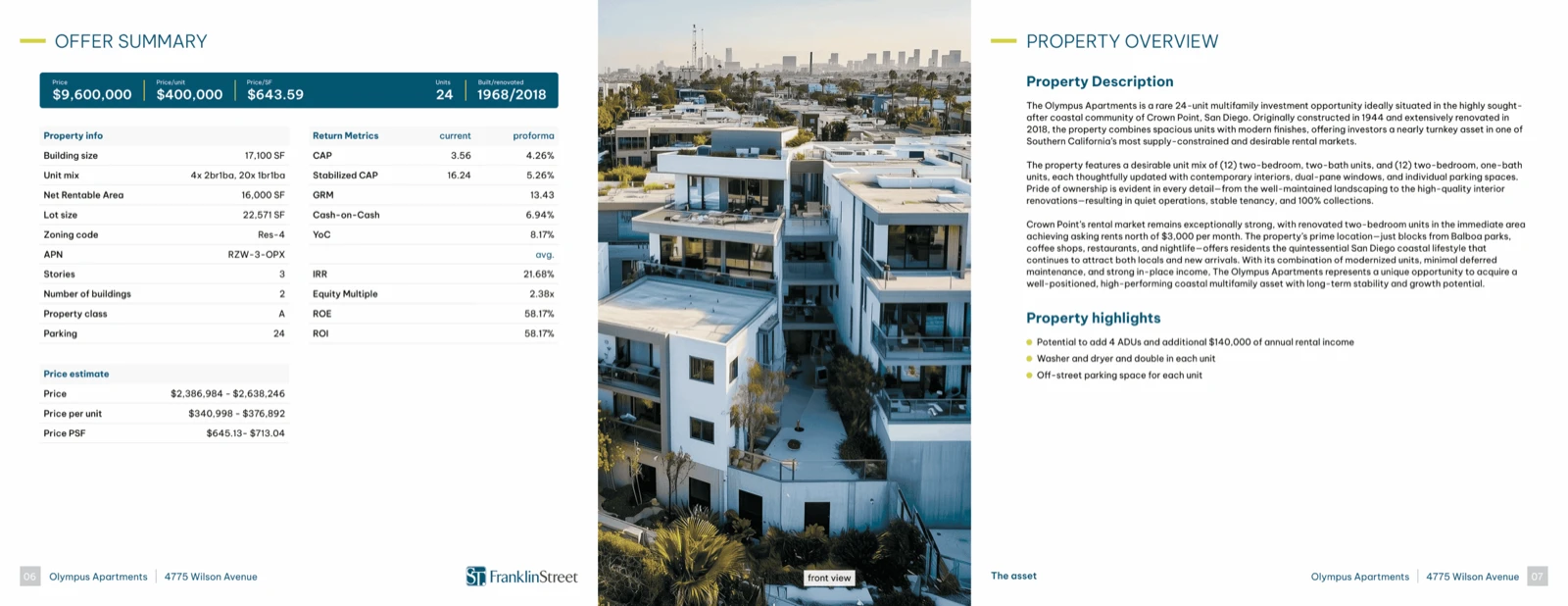
A well-structured CRE pitch deck contains: a property valuation analysis (the broker's view of market value and pricing recommendation), a marketing strategy (how the broker will position, package, and distribute the listing), a buyer targeting section (which specific buyers will be called first and why), a comparable sales summary, a timeline from engagement to close, and a brief team credentials section. That sequence mirrors what owners actually want to know — in the order they want to know it.
How brokers use it in practice
The pitch deck's most important function is structuring the conversation. A well-built pitch deck gives the broker control over the meeting from the first slide — you're leading the owner through your process, your analysis, and your differentiation, rather than responding to their questions reactively.
In practice, the most effective pitch decks start with the owner's outcome: "Based on comparable sales in your submarket over the last 18 months, we believe your property will trade in the $X–$Y range." That number makes every other slide more relevant, because the owner is now evaluating the strategy in the context of what they could actually receive. Brokers who bury the valuation at slide 8 after five slides of firm biography are making the owner wait for the only number they actually came to hear.
The buyer targeting section is often the most under-appreciated differentiator in a competitive pitch deck. Listing the names of three to five specific, qualified buyers you plan to call in the first week of the campaign — with a brief explanation of why each one is a likely purchaser — signals a level of market intelligence that a generalist firm cannot easily match. An owner who sees that you already know the buyers for their building will give you the listing over a firm with a better brand but a generic go-to-market strategy.
After the meeting, the pitch deck becomes the leave-behind that the owner references when comparing competing proposals. The Owner Prospecting Guide covers how to build the prospecting sequence that earns the pitch meeting in the first place. Its quality and clarity directly affect your close rate on listing appointments.
Common misconceptions
The most pervasive misconception is that a longer, more comprehensive pitch deck signals more expertise. It signals the opposite. Owners are busy. A 30-slide deck with five slides of firm tombstones and a 10-page credential section communicates that the broker either doesn't know what the owner cares about or is padding to disguise a lack of differentiated strategy. The most effective broker pitch decks are 8–12 slides, take 15 minutes to present, and leave time for the conversation that actually closes the listing.
A second misconception is that the pitch deck is a static template — the same document used for every listing, with the address swapped out. Owners notice immediately when they're receiving a generic package. The most conversion-effective pitch decks are customized at three points: the valuation and pricing section (which must reflect the actual asset and current comps), the marketing strategy (which should speak to the specific buyer pool for that property type), and the buyer target list (which should name actual, specific candidates). Everything else can be templated. Those three sections must be property-specific.
Frequently asked questions
How is a CRE pitch deck different from an OM?
A pitch deck is prepared before the listing is won — it's designed to persuade a property owner to hire you as their broker. An OM is prepared after the listing is won — it's designed to persuade qualified buyers to pursue the deal. Different audience, different goal, different structure. Brokers who use their OM template as a pitch deck are answering the wrong question in the meeting.
Should the pitch deck include the broker's commission rate?
Not typically in the deck itself — commission discussions usually happen verbally during or after the presentation. Including it in the deck can anchor the conversation on price before you've established value. Present your strategy and capability first; once the owner is sold on your approach, commission negotiation is a different conversation.
How customized does a pitch deck need to be for each listing?
The valuation, comparable sales, marketing strategy, and buyer targets must be property-specific — that's where your expertise is demonstrated. Team credentials, process overview, and market narrative can be templated. Plan on 60–90 minutes of customization time for a well-prepared pitch on a standard listing; less if you have automation tools handling the financial analysis.
What's the most common reason brokers lose listing pitches?
Leading with credentials instead of the owner's outcome. Owners don't hire the broker with the best tombstone slides — they hire the broker who convincingly demonstrated they know what the property is worth, have a specific plan to market it, and have the buyer relationships to execute. Reorder your deck accordingly.