

What is a Listing Website?
A dedicated single-property webpage built for a commercial listing — the highest-engagement format in CRE marketing, and the one most brokers still aren't using.
Key takeaways
- A listing website is a dedicated URL built for a single property — not a page on LoopNet, but a standalone web presence the broker owns and controls
- Listing websites generate higher engagement than PDFs — buyers bookmark and revisit them, which gives the broker visibility into ongoing interest
- Sharing a URL across email, social media, and broker networks eliminates the file-size friction of PDF distribution and creates a trackable link
- Any listing above $1M benefits from a dedicated web presence — the format signals professionalism and deal quality before the buyer reads a single word
The plain-English definition
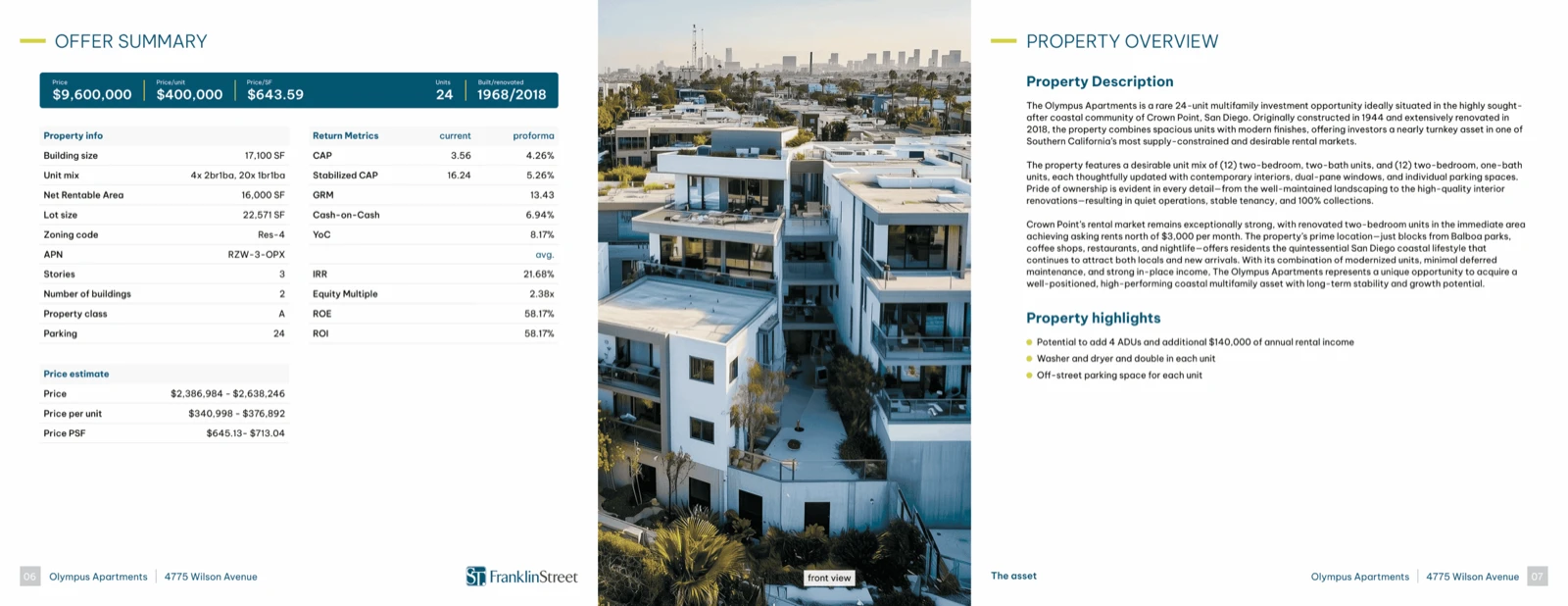
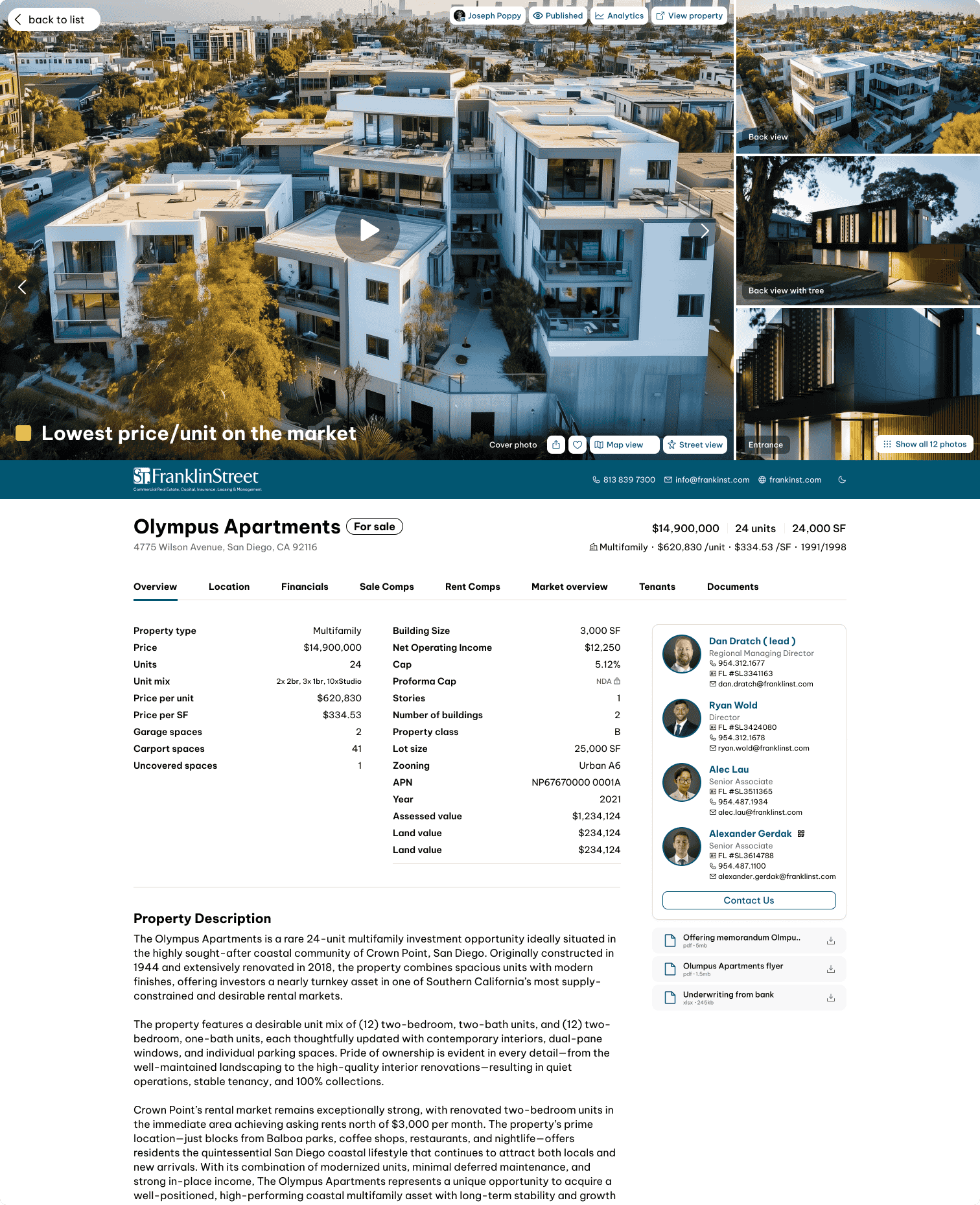
A listing website is a dedicated webpage — typically a single-property site at a clean URL — built specifically to market one commercial property to prospective buyers. Unlike a listing page on CoStar or LoopNet, a property website is owned and controlled by the broker. It carries the broker's branding, presents the property the way the broker wants it presented, and captures lead data through a form or contact CTA.
A well-built listing website contains everything a buyer needs to evaluate initial interest: a hero image or gallery, a concise property overview, key financial metrics (asking price, cap rate, NOI, square footage), a downloadable OM, a brief market narrative, and a contact form or calendar link. The best ones are mobile-optimized, load in under two seconds, and are designed to be shared — not just visited once.
The distinction from a portal listing matters. A LoopNet or CoStar page puts your property in a directory alongside every competing deal in the market, in a format you don't control. A listing website is a destination — the buyer goes there specifically for your deal. That difference in context changes how buyers engage with the content.
How brokers use it in practice
The listing website functions as the hub of your marketing distribution. Your email campaigns link to it. Your social posts link to it. Your OM includes the URL. Your broker outreach emails link to it instead of attaching a 15MB PDF. Every channel points to the same place, and every visit is trackable.
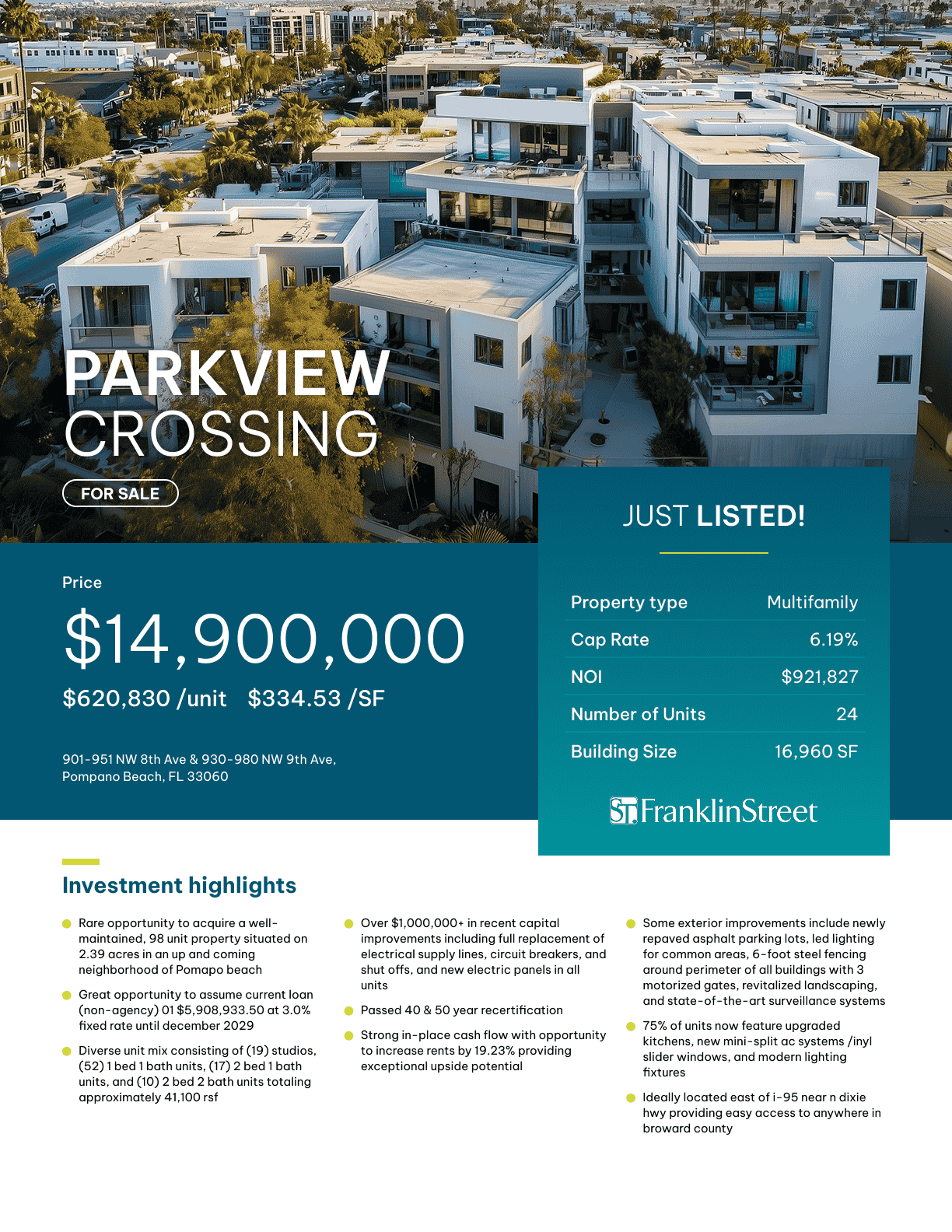
In practice, listing websites dramatically reduce distribution friction. Sending a 20MB PDF to a 500-person broker list results in bounce rates, spam folder issues, and PDFs that can't be forwarded easily. Sending a clean URL with a thumbnail preview takes two seconds to share via iMessage, email, or LinkedIn — and if a broker forward it to a client, you know because the visit data shows a new IP from a different city.
Listing websites also extend the deal's shelf life. A buyer who visited the property page twice in week one and three times in week three is signaling renewed interest — possibly because they closed another deal, got financing approved, or heard about the property from someone else. That behavioral data tells you who to call back and when. Brokers who use listing websites consistently report that a meaningful percentage of their deals come from buyers who initially passed but returned to the site weeks later.
IntellCRE generates your listing website automatically alongside your OM — so every new listing launches with both assets ready, not one or the other. The Listing Launch Guide explains exactly how to distribute your listing website for maximum first-week traffic.
Common misconceptions
The most common misconception is that listing websites are only for large, high-profile deals — trophy office buildings, major retail centers, or luxury multifamily. This isn't true. Any listing above $1M where you're trying to reach multiple qualified buyers benefits from the format. A $2M industrial flex building in a secondary market with a clean tenant and a long lease is exactly the kind of deal where a polished listing website differentiates you from the competing broker down the street who sent a PDF.
A second misconception is that a listing website requires a designer and a web developer. It used to. Today, purpose-built tools generate listing websites automatically from the same data used to produce the OM. The question isn't whether to use a listing website — it's whether you're going to use one that takes a week to build or one that generates in parallel with your marketing package.
Frequently asked questions
Should the OM be gated behind a form on the listing website?
For most deals, yes — requiring a name and email to download the OM captures lead data and gives you a reason to follow up. For very large deals where you're targeting a specific short list of buyers, an ungated OM is fine. The gating decision is a marketing call based on how broadly you want to distribute versus how tightly you want to qualify.
How is a listing website different from a property landing page on the broker's main site?
A listing website lives at its own URL — typically something like 123mainstreet.com or a clean subdomain — separate from the broker's firm website. This makes it easy to share, professional in its focus, and not dependent on the broker's main website navigation structure.
What happens to the listing website after the property sells?
Most brokers redirect the URL to a "sold" page or a deals tombstone — which serves as a proof-of-performance page for future prospects. Some use the sold listing page as a comparable reference in future BOVs or marketing materials, which extends its value beyond the transaction itself.
Do listing websites actually help close deals faster?
The data consistently shows that listings with dedicated web presences — as opposed to PDF-only distribution — generate more inquiries and qualify buyers faster. Buyers who visit a listing website multiple times before contacting the broker convert to tours at a higher rate than cold inquiries, because they've already self-selected through the information.