

What is a BOV (Broker Opinion of Value)?
A broker-prepared valuation analysis that estimates a property's likely market value — and the most effective prospecting tool in commercial real estate.
Key takeaways
- A BOV is not a formal appraisal — it's a market-based analysis prepared by a broker, typically at no cost to the owner
- In practice, the BOV is a prospecting tool as much as a valuation document — it opens doors that cold calls don't
- Owners often confuse a BOV with a licensed appraisal — clarifying the difference early builds trust instead of creating liability
- A well-prepared BOV demonstrates submarket expertise before any listing agreement is signed, which is why it converts at a higher rate than any other prospecting touchpoint
The plain-English definition
A Broker Opinion of Value — commonly called a BOV, and sometimes a BPO (Broker Price Opinion) — is a written analysis prepared by a commercial real estate broker to estimate what a specific property would likely sell for in today's market. It draws on comparable sales, current market conditions, income metrics (for income-producing properties), and the broker's submarket knowledge to produce a value range or point estimate.
A BOV is not a formal appraisal. It isn't conducted by a licensed appraiser, it doesn't follow USPAP standards, and it can't be used for lending or legal purposes. But that's not a limitation — it's the point. Because a BOV isn't regulated the way an appraisal is, a broker can prepare one quickly, share it freely, and tailor it to the owner's specific goals. A formal appraisal takes 2–4 weeks and costs $3,000–$8,000. A well-prepared BOV can be delivered in 48 hours at no cost to the owner.
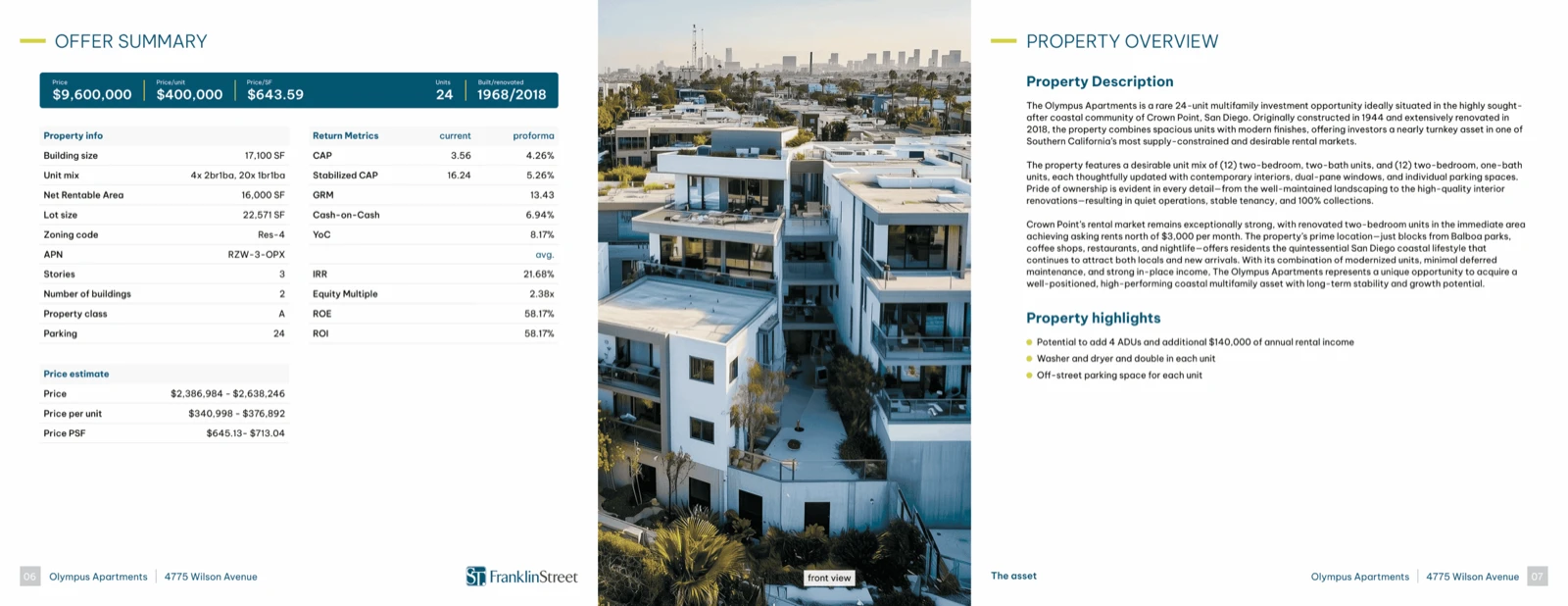
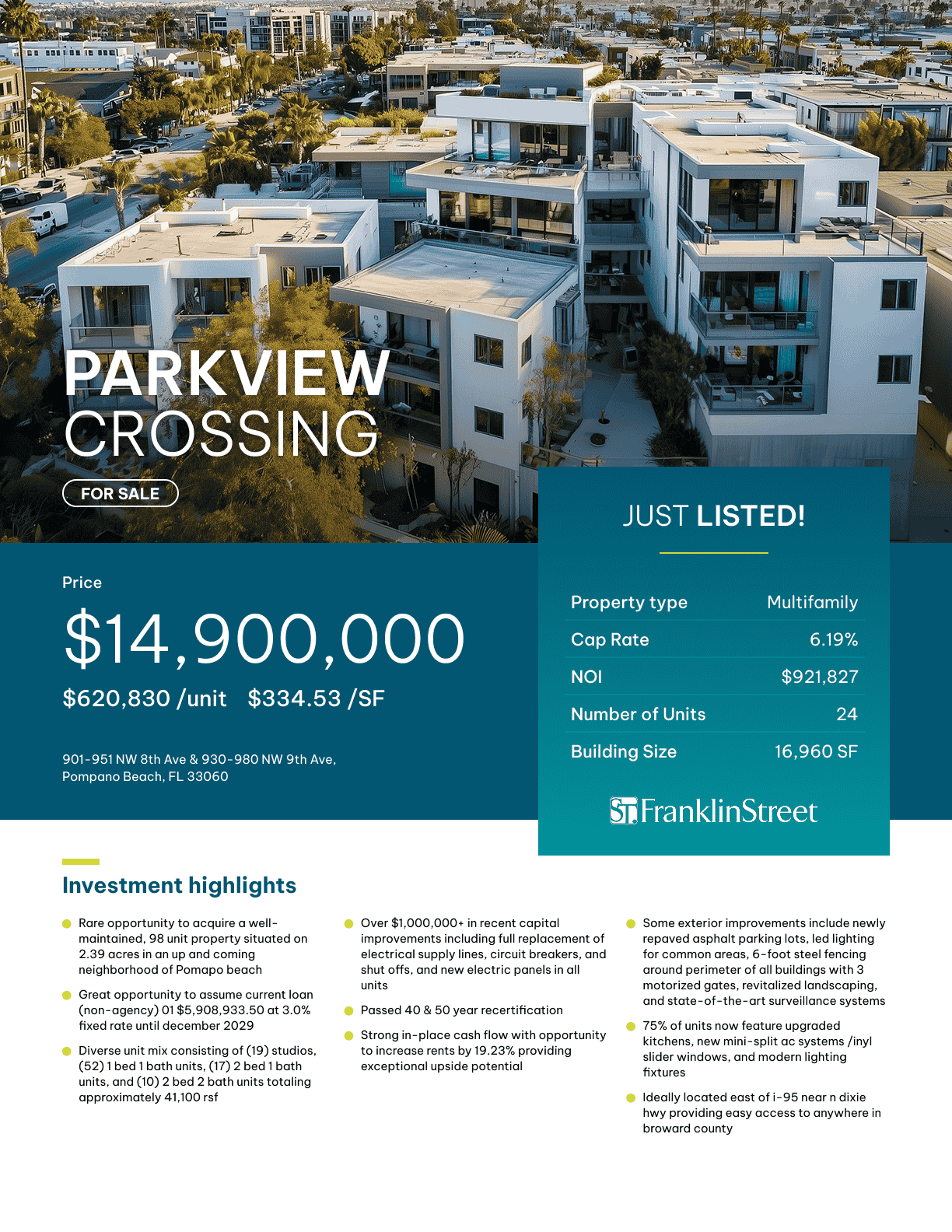
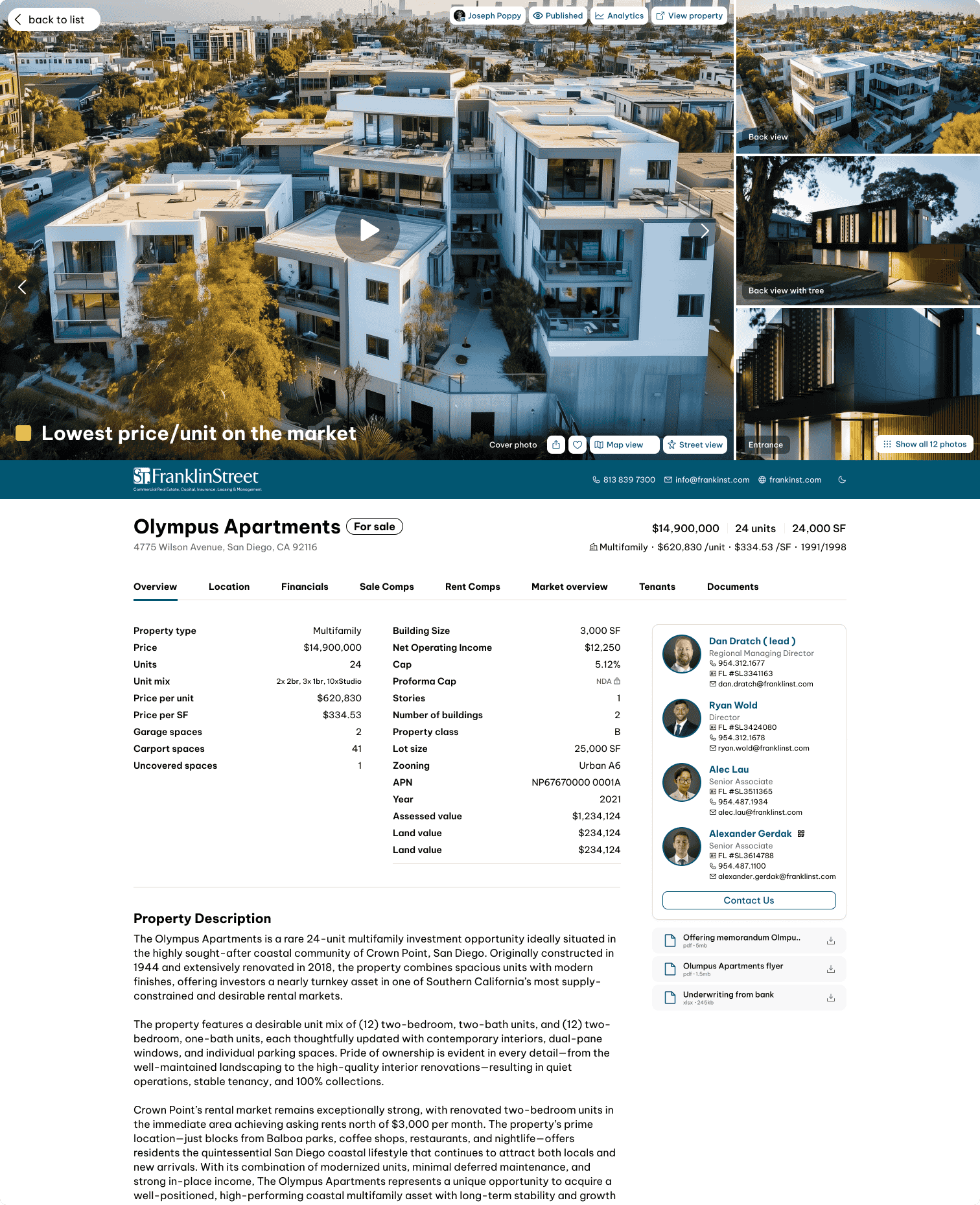
For income-producing properties, a BOV typically includes a cap rate analysis, a summary of comparable sales, a review of current rent roll and NOI, and a recommended pricing range. For land or owner-user properties, it leans more heavily on comparable sales and absorption data. The format matters less than the insight — the best BOVs answer the question the owner is actually asking: "What is my property worth right now, and what would it take to sell it?"
How brokers use it in practice
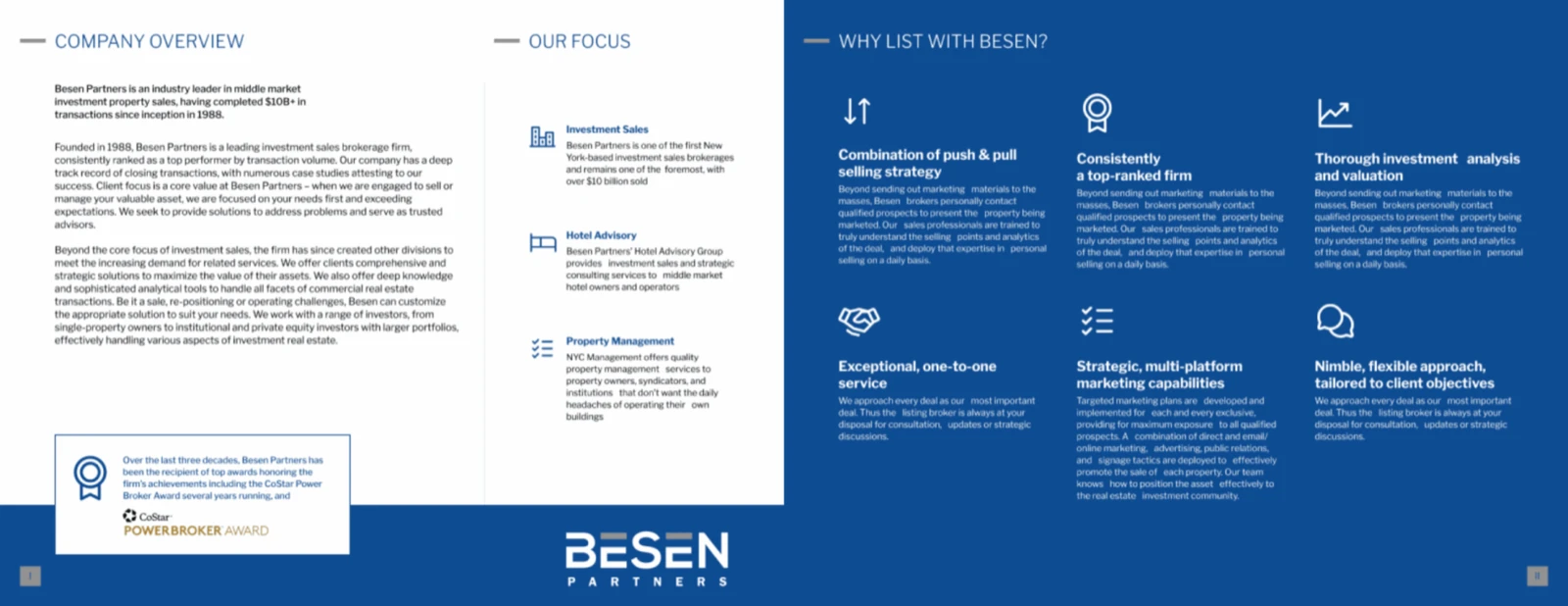
The BOV's primary use in practice isn't documentation — it's conversation. Brokers who consistently offer free BOVs to target owners in their submarket generate more listing conversations per month than brokers who rely on cold outreach alone. For the full owner prospecting framework built around the BOV, see our dedicated guide. The logic is simple: you're offering something of genuine value before asking for anything in return.
A typical BOV-driven prospecting sequence looks like this. First, you identify an owner in your target submarket — either through public records, a recent lease rollover, or a market event (a comparable sale nearby, a zoning change, a major tenant departure). Second, you reach out with a specific, low-pressure offer: "I just closed a comparable property on Commerce Drive at a 5.4% cap rate. I put together a quick analysis of what that means for your building — happy to share it if useful." Third, you deliver the BOV — in person or by email — and use it as the anchor for a listing conversation.
Brokers also use broker opinion of value analysis reactively, when an owner calls asking what their building is worth ahead of a refinance, an estate sale, or a partnership dissolution. In those cases, the BOV serves a documentation function — giving the owner a written reference point for decision-making. Either way, the broker who delivers the BOV is the broker who gets the listing call when the owner is ready to move. That listing call is when the listing launch framework takes over.
Common misconceptions
The most common misconception is that owners will discount a BOV because it isn't a formal appraisal. In reality, most owners don't need or want a regulated appraisal when they're exploring their options — they want a broker's honest read on the market. A well-prepared BOV with clear comps, a defensible methodology, and a broker who can walk through the numbers builds more confidence than a 60-page appraisal report most owners won't read.
A second misconception is that the BOV needs to be exhaustive to be useful. It doesn't. A 3–5 page analysis with a clear value range, 3–5 supporting comps, and a plain-English explanation of how you got there will outperform a 20-page document every time. The goal isn't to impress the owner with volume — it's to show them you know their asset and their market.
Frequently asked questions
Is a BOV legally binding or admissible in court?
No. A BOV is an informal market analysis prepared by a broker, not a licensed appraisal. It cannot be used for financing, litigation, or tax purposes. For any legal or lending context, the owner will need a USPAP-compliant appraisal from a licensed appraiser.
How long does it take to prepare a BOV?
For most commercial properties, an experienced broker can prepare a solid BOV in 2–4 hours using current comp data and submarket knowledge. With the right tools, that timeline compresses significantly — the research is the same, but formatting and assembly can be automated.
Should you charge for a BOV?
Most brokers offer BOVs free of charge as a prospecting tool — the implied return is the listing. Charging for a BOV is uncommon and typically reserved for complex institutional assets or situations where the owner has made clear they're not interested in listing.
What's the difference between a BOV and a CMA?
A Comparative Market Analysis (CMA) is the residential equivalent — used by residential agents to price homes. A BOV is the commercial version, typically more detailed, income-focused for investment properties, and explicitly not positioned as an appraisal.