


What is Dealbox?
IntellCRE's lead capture and deal data sourcing tool — a centralized inbox for inbound deal inquiries that feeds directly into the marketing and underwriting workflow.
Key takeaways
- Dealbox is IntellCRE's centralized intake system for inbound deal inquiries — it captures deal information from any source and organizes it into a structured pipeline record from day one
- Most brokers lose deal opportunities not because they lack leads, but because inbound inquiries arrive across disconnected channels with no consistent capture process
- A structured intake system means every deal that enters the pipeline has a complete data record — property type, asking price, timeline, source — that feeds directly into underwriting and marketing workflows
- Even a solo broker handling 5–10 deals per year benefits from a structured intake process — the cost of a single missed or mismanaged inquiry outweighs months of manual tracking effort
The plain-English definition
Dealbox is IntellCRE's lead capture and deal data sourcing tool. It functions as a structured intake system for inbound deal inquiries — a single, organized entry point for every deal opportunity that comes to a broker's attention, regardless of the channel it arrives through.
When a seller reaches out about listing their building, when a referral sends over an off-market opportunity, when a contact at a networking event mentions they're considering selling — all of those touch points represent deal leads that need to be captured, qualified, and tracked before any marketing or underwriting work begins. Without a structured system, those leads live in email threads, phone notes, text messages, and memory. Some get followed up promptly. Some get lost. Some get followed up weeks later, after the opportunity has already moved to a competing broker.
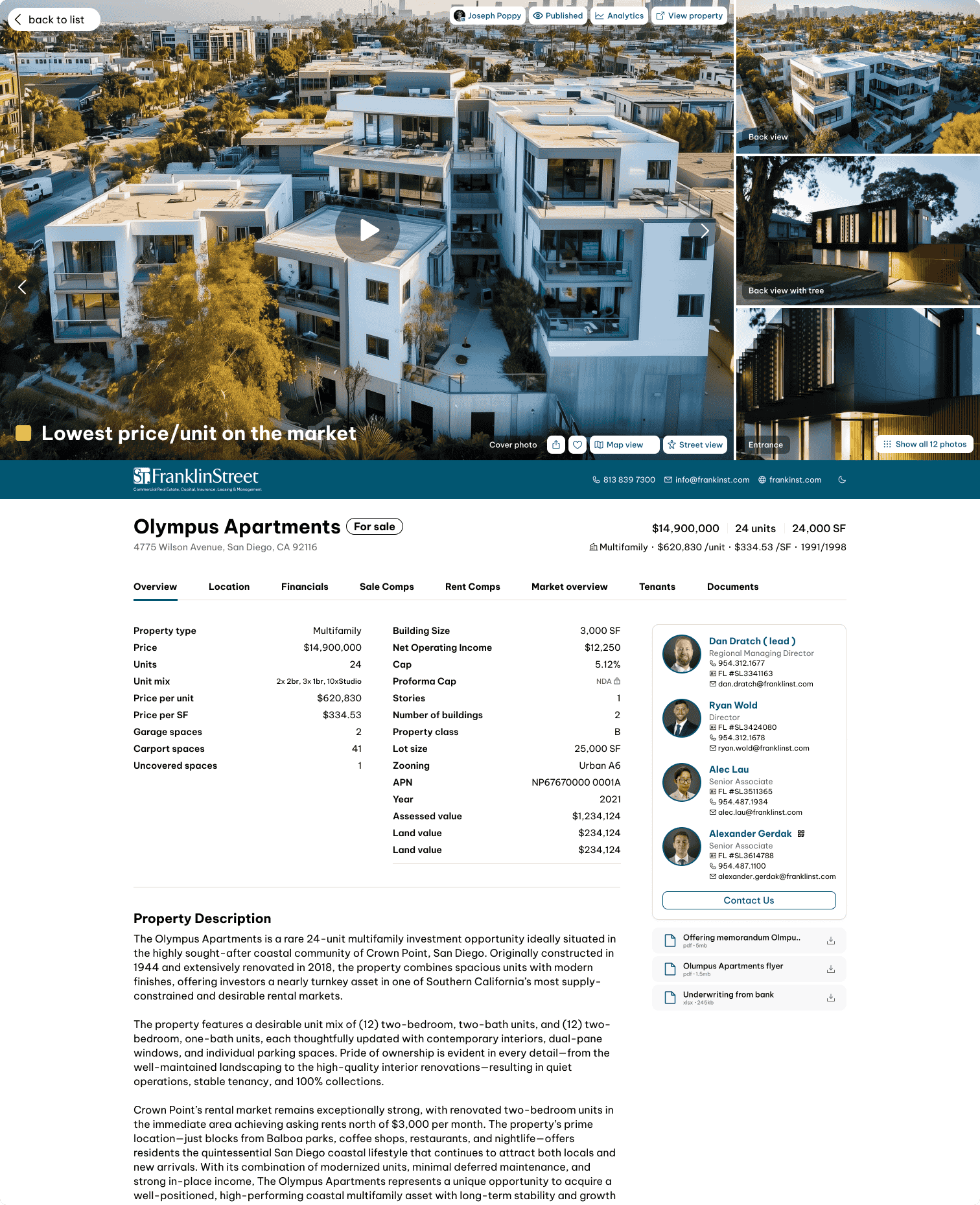
Dealbox creates a consistent intake experience: each inbound lead is entered into a structured record with the property details, source, timeline, and owner contact information captured at the point of first contact. That record then feeds into the broader IntellCRE workflow — so when the deal is ready to move into underwriting or marketing, the foundation is already built. The intake form becomes the starting point for the BOV, the OM, and the listing launch, rather than a data re-entry exercise that slows down every subsequent step.
How brokers use it in practice
The problem Dealbox solves isn't lead generation — it's lead capture and continuity. Most active brokers receive more inbound deal inquiries than they realize. The gap is in how those inquiries are handled: a seller email gets buried in a full inbox, a voicemail doesn't get logged, a LinkedIn message sits in a disconnected queue. Each of those is a potential deal that never made it into the pipeline.
A broker using Dealbox establishes a single intake point — a consistent process for logging every inbound inquiry within 24 hours of receipt, regardless of channel. The structured intake form asks for the information that matters: property type, approximate size and value, seller's timeline, how the lead was sourced, and any preliminary financial data the seller has shared. That discipline alone — the habit of capturing every inquiry in a structured format rather than a mental note — reduces deal leakage meaningfully across a full year's pipeline.
The downstream benefit is equally significant. When a lead is captured with complete data from day one, the transition from lead to active deal is faster. You can find information on using Dealbox for lead capture and deal data sourcing to understand how the intake flow connects to underwriting and marketing. Instead of spending the first hours of a new engagement tracking down basic property information you should have captured at intake, the deal record is already populated. The broker who can deliver a preliminary BOV within 48 hours of a seller's initial inquiry consistently outperforms the broker who comes back a week later asking for the rent roll.
For brokers managing multiple active deals simultaneously, Dealbox also serves a pipeline visibility function: you can see every active lead, its current stage, and its last touch point without building a custom CRM from scratch.
Common misconceptions
The most common misconception about Dealbox is that it's only useful for high-volume brokers — teams handling 20, 30, or more deals per year who genuinely need a system to avoid dropping balls. That's not the right frame. The cost of a missed or poorly tracked deal inquiry is disproportionately high regardless of deal volume. A solo broker who closes 6–8 deals per year and loses one because an inbound inquiry fell through a crack has lost 12–16% of their annual production to a process failure. That's not a scale problem — it's a systems problem, and it happens at every volume level.
The second misconception is that structured intake requires significant time investment. It doesn't. Logging a lead into Dealbox at first contact takes 3–5 minutes. The alternative — reconstructing the information later from email threads, text messages, and memory — takes 30–60 minutes and still produces an incomplete record. The return on 5 minutes of structured intake at the front end is measured in hours saved and deals not lost downstream.
A third misconception is that Dealbox is a standalone tool disconnected from the rest of the workflow. It's the opposite: it's the entry point for the IntellCRE workflow, which means the data captured at intake flows directly into underwriting, marketing document generation, and pipeline tracking. A broker who uses Dealbox as the front door to their deal pipeline eliminates the data re-entry that fragments most broker workflows — and that friction reduction compounds across every deal in the pipeline over the course of a year.
Frequently asked questions
What information does Dealbox capture at intake?
Dealbox captures the core deal data needed to qualify and track an inbound lead: property type, address, approximate size and value, owner contact information, the broker's lead source, the seller's stated timeline, and any preliminary financial data provided at first contact. The structured format ensures that every deal enters the pipeline with the same minimum information set — no incomplete records, no "I'll fill this in later" deals that never get updated.
Can Dealbox handle leads from multiple sources simultaneously?
Yes. Dealbox is designed as a channel-agnostic intake system — it doesn't matter whether the lead arrived via email, phone, referral, LinkedIn, or a direct inquiry form. The intake process is the same regardless of source, which is what allows it to function as a single pipeline view across all inbound channels.
How does Dealbox connect to the rest of the IntellCRE workflow?
The data captured in Dealbox at intake feeds directly into IntellCRE's underwriting and marketing document generation workflows. When a deal moves from lead to active, the property data — address, size, property type, preliminary financials — is already in the system and populates the BOV, proforma, and OM intake forms automatically. This eliminates the re-entry step that typically adds hours to the front end of every new engagement.
Is Dealbox useful if I already use a CRM?
It depends on whether your CRM is structured for CRE deal intake specifically. Generic CRMs capture contact data and activity logs but typically don't capture the deal-specific data fields — property type, cap rate, NOI, timeline — that feed into CRE underwriting and marketing workflows. Dealbox is purpose-built for that intake use case, which means it connects to the downstream workflow in ways a general CRM doesn't.